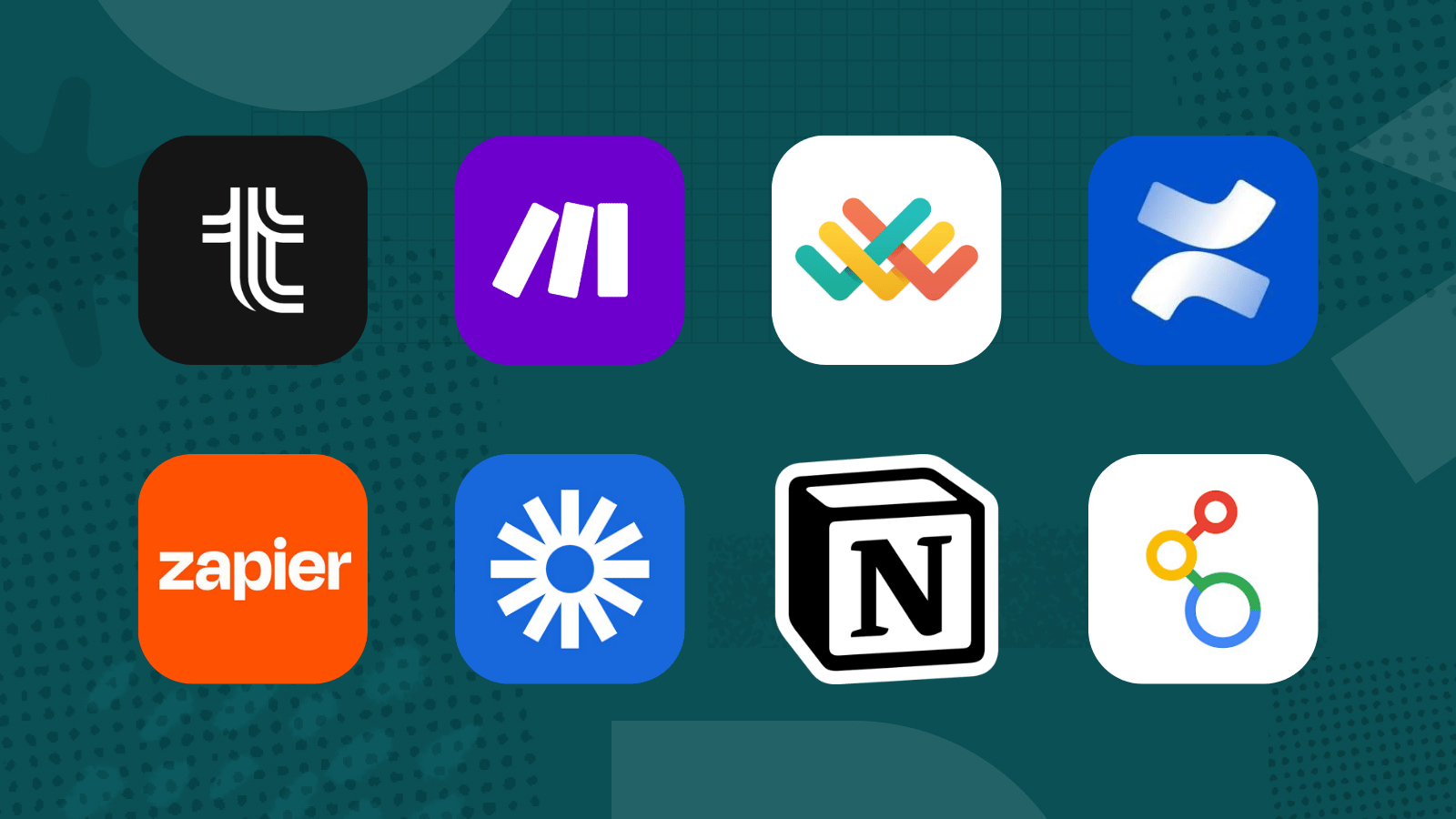
Most BizOps teams don't have a tool problem. They have a stack problem.
There's a Slack channel for status updates. A spreadsheet for goals. A BI tool for data. A project management tool for initiatives. And somehow, none of it talks to the rest. You spend more time managing the stack than managing the business.
BizOps is supposed to be the function that keeps the business running efficiently. When your own operations are fragmented across a dozen tools, that efficiency disappears fast. If you're newer to the function, our guide on what a BizOps team does covers the role's responsibilities in detail — and our BizOps hub covers how it sits relative to StratOps and RevOps.
This guide cuts through it. Here are the best BizOps tools by use case, and a framework for building a stack that works together.
What does a BizOps team actually need from its tools?
BizOps sits at the intersection of strategy and execution. On any given week, a BizOps team might be tracking quarterly goals, pulling data to support a business case, automating a broken process, and running the weekly ops review.
That breadth means the BizOps tool stack tends to sprawl. But at its core, you need coverage across four use cases:
- Goal setting and execution visibility (what are we trying to do, and are we on track?)
- Data and analytics (what does the data say?)
- Automation (what can we stop doing manually?)
- Communication and collaboration (how do we stay aligned?)
We'll go through each.
BizOps tools for goal setting and execution
This is the foundation. If your BizOps team doesn't have a clear system for setting goals and tracking progress, everything else is just noise.
The mistake most teams make is treating this as a spreadsheet problem. Goals live in a shared Google Sheet, someone updates it once a quarter, and the rest of the time nobody knows whether the business is on track.
The better approach is a purpose-built tool with structured check-ins, clear ownership, and status reporting that doesn't require anyone to chase updates.
ℹ️ if you're looking for OKR software specifically, check out our list of best OKR software.
Tability
Tability is the most practical choice for BizOps teams at the growth stage. It's built specifically for the goal-setting and execution layer — not project management, not performance reviews — just OKRs and the operating cadence around them. The same cadence that StratOps functions rely on to keep strategy and execution connected.
What makes it work for BizOps in particular: you can set company-level goals, cascade them to team level, and run weekly check-ins that surface blockers before they become misses. The reporting is clean enough that you can use it directly in your weekly ops review without exporting anything.
It's also the right price point for a BizOps team. You get everything you need for a proper goal-tracking process without enterprise pricing. See how it stacks up on the Tability comparison page.
Lattice
Lattice is a stronger fit if your BizOps function also owns performance reviews and people data. It has OKR functionality built in, alongside feedback cycles, 1:1s, and engagement surveys. If you want one tool for both people operations and goal tracking, Lattice covers both. The downside: more complexity than most BizOps teams need for pure goal execution. See more: Lattice alternatives.
Perdoo
Perdoo is worth a look for teams that want a dedicated OKR tool with strong roadmap integration. It works well if you're running formal OKR cycles with quarterly planning sessions and want clear visualisation of how goals ladder up. See the Perdoo comparison for a full breakdown.
Best for: Tability for most BizOps teams. Lattice if you also own HR and people data. Perdoo for formal OKR programmes.
BizOps tools for data and analytics
BizOps teams are often the ones fielding ad hoc data requests: retention numbers for Q3, funnel breakdown for enterprise, a dashboard for the board deck.
You need a tool that lets you query your data warehouse and build dashboards without needing a full data engineering background.
Metabase
Metabase is the easiest entry point. It connects to most databases (Postgres, BigQuery, Snowflake, MySQL) and lets non-technical users ask questions visually or using SQL. For a BizOps team that does some SQL but isn't a data engineering team, it hits the right balance of power and accessibility.
Looker
Looker (now part of Google Cloud) is the enterprise choice. If your company already has a Looker instance with a semantic layer built out, it's excellent for BizOps: you can build dashboards from trusted, pre-defined metrics without arguing about data definitions. The downside is setup cost; you need a data team to build and maintain the model.
Mode
Mode is strong for teams that live in SQL and want to share analytical work as polished reports. It's particularly good for BizOps teams that regularly produce operational analyses for senior leadership.
Google Looker Studio
For lighter data needs, don't overlook Google Looker Studio (formerly Data Studio). It's free, connects to Google Sheets and BigQuery easily, and is good enough for most weekly reporting dashboards.
Best for: Metabase for most BizOps teams. Looker if your company has data infrastructure. Mode for analyst-heavy teams. Looker Studio for lightweight reporting.
BizOps tools for automation
A core part of BizOps is identifying manual processes that shouldn't be manual. Once you've found them, you need tools to automate them without waiting on engineering.
Zapier
Zapier is the default choice for most BizOps teams. It has the widest library of integrations (6,000+) and a visual interface that doesn't require coding. Common BizOps use cases: routing form submissions to Slack, syncing CRM data to a spreadsheet, triggering tasks when deals close.
Make
Make (formerly Integromat) is more powerful than Zapier for complex workflows and significantly cheaper at scale. If you're running workflows with multiple branches, data transformations, or loops, Make handles them more elegantly. The learning curve is steeper, but for a technical BizOps team it's worth it.
n8n
n8n is the self-hosted option for teams with a data security mandate or who want full control. It's open-source and can run on your own infrastructure, which matters in regulated industries or enterprise environments.
Best for: Zapier for simplicity and breadth. Make for complex or high-volume workflows. n8n for self-hosted environments.
BizOps tools for communication and alignment
BizOps teams are often the connective tissue between departments. You're running the weekly ops review, synthesising updates from product, sales, and finance, and communicating decisions back out. Having the right tools for this makes the difference between alignment and chaos.
Notion
Notion has become the default internal wiki and ops playbook tool for growth-stage companies. It's flexible enough to handle project tracking, meeting notes, documentation, and SOPs in one place. The downside is that flexibility: without strong conventions, Notion workspaces get messy fast. BizOps should own the governance here.
Confluence
Confluence is the enterprise alternative, particularly if your company runs Jira for engineering. The integration is strong, and it's a better fit for structured documentation that needs to live alongside technical work.
Loom
Loom is underrated for BizOps. Async video updates take half the time of a written update to produce and are more likely to be consumed. For weekly ops reviews, strategic alignment updates, or walking a stakeholder through a complex analysis, Loom beats a wall of text.
Best for: Notion for most growth-stage teams. Confluence for enterprise Jira environments. Loom for async updates and stakeholder comms.
How to build a BizOps tool stack that actually works
The risk with any tool roundup is that you end up with everything on the list and none of it integrated. Here's a more useful way to think about it.
Start with the goal layer. Everything else in your BizOps stack is in service of knowing whether the business is on track. Get that right first, and you'll have a natural anchor for the rest of the stack. The goal-tracking tool is the thing your ops review, your check-ins, and your quarterly planning sessions should orbit around.
Add tools as the team hits actual friction, not imagined friction. Most BizOps teams don't need all four categories covered on day one. Automate when you feel the manual pain. Add analytics depth when the ad hoc requests start taking more than a few hours per week.
Prioritise integration over completeness. A smaller stack where data flows between tools beats a large stack where everything is siloed. The goal layer (Tability or equivalent) should connect to your comms tools. Your analytics tool should feed into your ops review. The best BizOps stacks feel cohesive, not assembled.
The most effective BizOps teams aren't the ones with the most tools. They're the ones whose tools are actually used, updated, and connected to how the business runs week to week.
Ready to sort out your goal layer?
Tability is built for exactly this: the goal-setting and execution layer that sits at the centre of every BizOps function. It connects OKRs, weekly check-ins, and initiative tracking in one place, without the overhead of an enterprise platform. Sign up free or book 30 minutes to see how other BizOps and StratOps teams are using it.

.jpg)
.png)