.png)

How do you connect strategy to execution?
You’re the organiser—the StratOps leader—the one responsible for implementing the business strategy. You are the architect of the whole system, connecting strategy, operation, and execution. Leadership has set the direction, the strategy deck is polished, and the priorities are clear—at least at the top. But as the rollout begins, the clarity starts to fade.
Department plans land on your desk with different interpretations. Some teams charge ahead in the new direction, others stick to familiar territory. Progress updates feel disjointed, and the thread tying it all back to the company vision starts to fray.
It’s like trying to connect a thousand dots without knowing what the final picture is supposed to be.
That’s where strategic pillars come in. They give every team the same frame of reference—the same set of guiding priorities—so your strategy doesn’t just launch, it stays intact from vision to execution. In this guide, we’ll break down what strategic pillars are, why they matter, common examples, and how to define them for your own organisation.
What are strategic pillars?
Strategic pillars are the small set of focus areas that hold your strategy together. They’re the enduring priorities that connect your company’s long-term goals with the work teams execute every day. If your strategy is the destination, your pillars are the main routes to get there—clear enough to guide decisions, strong enough to last for years.
They’re not short-term goals or one-off projects. Instead, they are broad, long-term themes that remain relevant even as specific objectives and tactics change. They act like load-bearing columns: remove one, and the structure starts to weaken.
One of their biggest strengths is that they simplify complexity. A company might have dozens of goals and hundreds of projects in motion, but pillars group them into a small number of coherent focus areas. This makes the strategy easier to communicate and easier for people to remember—because if teams can’t recall your strategy, they can’t act on it.
You might see them described with different terms at your company. For the most part, these terms all mean the same thing and are interchangeable. Such as:
- Strategic priorities – high-level areas that guide decision-making.
- Themes – broad concepts that capture the essence of the strategy.
- Focus areas – specific domains that deserve the most attention.
- Mission-critical objectives – essential goals that must be achieved for success.
Whatever the label, the role is the same: to anchor your vision in a small set of non-negotiable priorities that everyone can rally behind.
Key characteristics of strategic pillars
- High-level and long-term – They remain relevant for several years, even as specific tactics and short-term goals evolve.
- Theme-based – Broad enough to apply across multiple teams and functions, yet focused enough to guide decision-making.
- Stable but flexible – Consistent enough to create alignment year over year, but adaptable to shifts in market or organisational priorities.
- Actionable – Each pillar can be broken down into measurable goals, OKRs, and initiatives that bring it to life.
- Few in number – Most companies have 3–5 pillars, which makes them easier to remember and keeps focus tight.
- A common language for the organisation – Perhaps their most underrated strength. Pillars create a shared vocabulary across leadership, managers, and frontline teams. When goals, updates, and priorities are grouped under the same pillar names, everyone uses the same frame of reference. This reduces misinterpretation, reinforces alignment, and makes it easier for teams to see how their work contributes to the bigger picture.
Why your business should have strategic pillars
A strategy is only as strong as its ability to guide action. You can have a beautifully crafted vision and a set of ambitious goals, but if every team interprets them differently, you’ll end up with misaligned projects, wasted effort, and inconsistent results. Strategic pillars prevent that drift by creating a small set of priorities that everyone understands and uses to steer their decisions.
For organisers—Chiefs of Staff, COOs, Operations Managers, StratOps leaders—they’re more than a planning tool. They’re the backbone of execution. Here’s why:
- They translate vision into something tangible - A vision like “be the most customer-centric company in our industry” is inspiring, but vague. A strategic pillar like Customer Experience Excellence turns that vision into a focus area that can be broken down into measurable goals, strategic initiatives, and projects.
- They create a common language across the organisation - When you group goals, initiatives, and updates under pillars, everyone—leadership, managers, individual contributors—uses the same frame of reference. This consistency reduces misunderstandings and helps teams see how their work fits into the whole.
- They make prioritisation easier - New opportunities and urgent requests pop up constantly. Pillars give you a quick filter: Does this align with one of our pillars? If not, it’s either deprioritised or consciously delayed.
- They provide stability in changing environments - While quarterly goals and tactics can shift, your pillars remain relatively steady over several years. This gives teams a reliable sense of direction even in volatile markets or organisational changes.
They improve reporting and strategic oversight - Organising metrics and updates by pillar lets leaders quickly see which areas are thriving and which need attention. Instead of drowning in fragmented data, you get a clear, strategy-aligned view of performance. - They prevent resource dilution - Without pillars, it’s easy to spread budgets, headcount, and time across too many competing priorities. With them, resources can be allocated to the areas that will have the biggest strategic impact.
Without strategic pillars, strategy execution often turns into a patchwork of disjointed initiatives—plenty of motion, but not always progress. With them, you have a clear through-line from vision to execution that keeps the entire organisation moving in sync.
Common examples of strategic pillars
Knowing the definition is one thing — seeing how it works in practice is another. Strategic pillars can be described in a few words, but the way you frame them determines whether they’re memorable, actionable, and inspiring for your teams.
While every organisation’s pillars will be shaped by its vision, market, and stage of growth, some themes appear again and again. These examples aren’t meant to be copied word-for-word, but they can help spark ideas and give you a starting point for your own set.
Customer experience
Deliver exceptional value and satisfaction at every stage of the customer journey.
Example sub-goals: improve Net Promoter Score (NPS), reduce support response time, launch a proactive customer feedback program.
Innovation & product development
Create new products, features, or services that solve critical customer problems or open new markets.
Example sub-goals: launch two major product updates per year, implement a rapid prototyping process, explore emerging technologies.
Operational excellence
Improve efficiency, quality, and reliability in your processes to reduce costs and enhance delivery speed.
Example sub-goals: shorten delivery cycles by 20%, increase system uptime to 99.9%, optimise supply chain performance.
Financial performance
Strengthen profitability, revenue growth, and cost efficiency for long-term sustainability.
Example sub-goals: increase recurring revenue, improve gross margins, reduce cost per acquisition (CPA).
Market expansion
Grow into new regions, industries, or customer segments to increase reach and resilience.
Example sub-goals: enter three new geographic markets, diversify customer base, form strategic partnerships in target industries.
Talent & culture
Attract, retain, and develop high-performing, engaged teams that thrive together.
Example sub-goals: improve employee engagement score, launch leadership development programs, enhance diversity and inclusion metrics.
Sustainability & social impact
Embed environmental and social responsibility into your business model and decision-making.
Example sub-goals: achieve net-zero emissions by a target year, increase supplier diversity, invest in community programs.
Brand & reputation
Build and protect a strong, trusted brand that is recognised for its values and expertise.
Example sub-goals: secure top-tier media coverage, grow share of voice in the industry, improve brand sentiment scores.
Most companies settle on three to five pillars, not all eight. The goal is focus, not coverage. The right set of pillars should reflect your company’s strengths, ambitions, and the challenges you need to overcome to achieve your vision.
How to define your own strategic pillars
Defining strategic pillars isn’t just a planning exercise — it’s the foundation for how your organisation will focus its energy over the next several years. Here’s a practical, step-by-step approach to creating pillars that are clear, relevant, and actionable.
1. Start with your company vision and strategy
Revisit your long-term mission and vision, and the strategy you’ve set to achieve it. Your pillars should act as the bridge between that vision and the practical work that needs to happen. If your vision is the destination, your pillars are the main routes that will take you there.
ℹ️ How to write a mission statement
2. Identify the key drivers of success
Ask: What must we get right to achieve our vision?
This might include product innovation, market expansion, operational efficiency, or customer experience — but the answers will depend on your industry, competitive position, business opportunity and current challenges.
3. Involve leadership and key stakeholders
Strategic pillars require buy-in from the top. Facilitate workshops or planning sessions with executives and senior managers to align on what matters most. The more collaborative the process, the more ownership you’ll have across the organisation.
4. Limit yourself to three to five pillars
Too many pillars dilute focus and make them harder to remember. Choose the few that will have the biggest impact on your long-term success. They should be broad enough that any of your teams, whether it’s engineering or customer success, can find ways to relate to them in the work they do.
Remember: a short list forces you to prioritise, which is the whole point.
5. Phrase them as enduring priorities
Avoid time-bound or overly tactical language.
For example:
- Weak: Launch new product line (too specific and time-limited)
- Strong: Innovation & product development (broad and long-term)
6. Test for clarity and relevance
Your pillars should be easy to explain in plain language and meaningful to everyone in the company. If someone on the front line can’t understand how their work relates to a pillar, it’s probably too vague or abstract.
7. Document and communicate them consistently and often
Once you’ve finalised your pillars, make sure they’re visible in strategic plans, all-hands meetings, team roadmaps, and reporting dashboards. Whatever you call it — pillars, themes, focus areas, etc. — make sure that term comes up often so your people are always top of mind for people.
How to use strategic pillars to link strategy to execution
Strategic pillars only matter if they shape day-to-day work. The easiest way to make that happen is to place them squarely inside your strategy pyramid, so anyone can trace a line from the company’s long-term bets to the tasks on their plate this week.
.png)
Think of the layers like this: corporate strategy sets where the organisation plays; business strategy defines how each unit will win; functional strategy spells out what each department will do; and operational execution is how that work actually gets done. Pillars sit just below strategy and are interpreted at every layer, with OKRs tucked directly underneath to make progress measurable.
Zooming out, the whole thing should feel like a simple cascade:
Vision → Strategy → Pillars → OKRs/goals → Initiatives → Day-to-day tasks

A quick example makes it concrete:
- Pillar: Customer experience
- Goal: Improve customer retention by 10%
- Initiative: Launch onboarding program for new customers
- Tasks: Update help docs, create onboarding emails, train support team
Map OKRs directly to each pillar
Pillars set the broad focus, but OKRs give you measurable outcomes within that focus. This level is also where you’ll start to delegate and break down strategy into the team level. By linking your OKRs (set per team) to your strategic pillars, you create a framework where every goal is clearly tied to a long-term priority — and every team can see where they fit in.
From a company-wide perspective, a well-crafted pillar is broad enough that any team, in any function, can relate their work to it.
Let’s take customer experience as an example strategic pillar:
- Engineering might focus on improving site speed or reliability.
- HR could set goals around hiring and onboarding customer-facing roles.
- Customer Success might target faster response times or better satisfaction scores.
ℹ️ Looking for examples relevant to your team? Check out our library of team-specific OKR examples.
Even though their work looks different, they’re all contributing to the same strategic focus area. That shared direction keeps teams aligned even when they’re solving different problems.
From a team perspective, pillars act as both a compass and a connector. They guide teams when defining their own OKRs, making sure each goal is anchored to a bigger business priority. At the same time, they help teams see the why behind their work — how their efforts contribute directly to a major business objective.
When you set this up properly, you can break work down by pillar and see exactly which teams, individuals, and projects are contributing to that goal. For example, you could pull up the Customer experience pillar and instantly view:
- Company-level OKRs.
- Team-level OKRs for Engineering, Customer Success, Marketing, etc.
- The specific initiatives and tasks tied to each key result.
This creates a visible through-line from vision to execution, making it easy to track progress, spot gaps, and recognise contributions across the organisation.
Example:
Pillar: Customer experience
- Company-level Objective: Improve customer retention and satisfaction.
- Company-level Key Results:
- Increase NPS from 45 to 60.
- Reduce average support response time from 4 hours to 1 hour.
- Achieve a 90% customer renewal rate.
- Aligned Team Key Results:
- Engineering: Reduce page load times from 3s to 1.5s.
- Customer Success: Increase first contact resolution rate to 85%.
- Marketing: Grow participation in customer feedback surveys by 40%.
By taking this layered approach, you make the connection between vision, pillars, and execution visible at every level — from the CEO’s priorities to the work an individual contributor is doing this week.
From OKRs to initiatives and day-to-day
Once the outcomes are clear, turn them into work people can actually do. Initiatives are the bridge: purposeful programs designed to move a key result. They’re scoped, time-bound, funded and owned (one executive sponsor, one delivery owner), and often cross-functional with clear milestones and dependencies.
Tasks are the atomic pieces that sit under each initiative—tickets, user stories, campaigns, SOP updates. Each task should name the initiative and key result it serves, have a single DRI, and a due date. Plan them in sprints or weekly cycles so progress is visible against the KR, not just the backlog.
At the team level, the translation becomes routine: roadmaps map to pillars; team OKRs break the company outcomes into function-specific KRs; sprint planning and stand-ups ask a simple question—which KR does this move? If the answer is “none,” it’s deprioritised or made an explicit exception.
Reporting and the feedback loop back to strategy
Execution isn’t finished until the learning returns to the top. Report by pillar first, then by team, so leaders see a clean story of progress: KR movement, milestone burn-down, risks and resourcing—for each pillar.
Use a steady cadence to keep the loop tight: weekly team check-ins on KR movement; monthly pillar reviews led by the operational owner with the exec sponsor; quarterly business reviews to rebalance investment by pillar, not by department.
Insights from these reviews inform the next cycle of OKRs and initiatives. If signals show a pillar is complete, off-track, or no longer strategic, propose a light-touch annual adjustment at the corporate-strategy layer. Outcomes—not activity—drive decisions, ensuring the work at the bottom continually validates (and refines) the bets at the top.
A lot of this reporting can be automated using a good Enterprise OKR software.
Align teams around strategic pillars in Tability
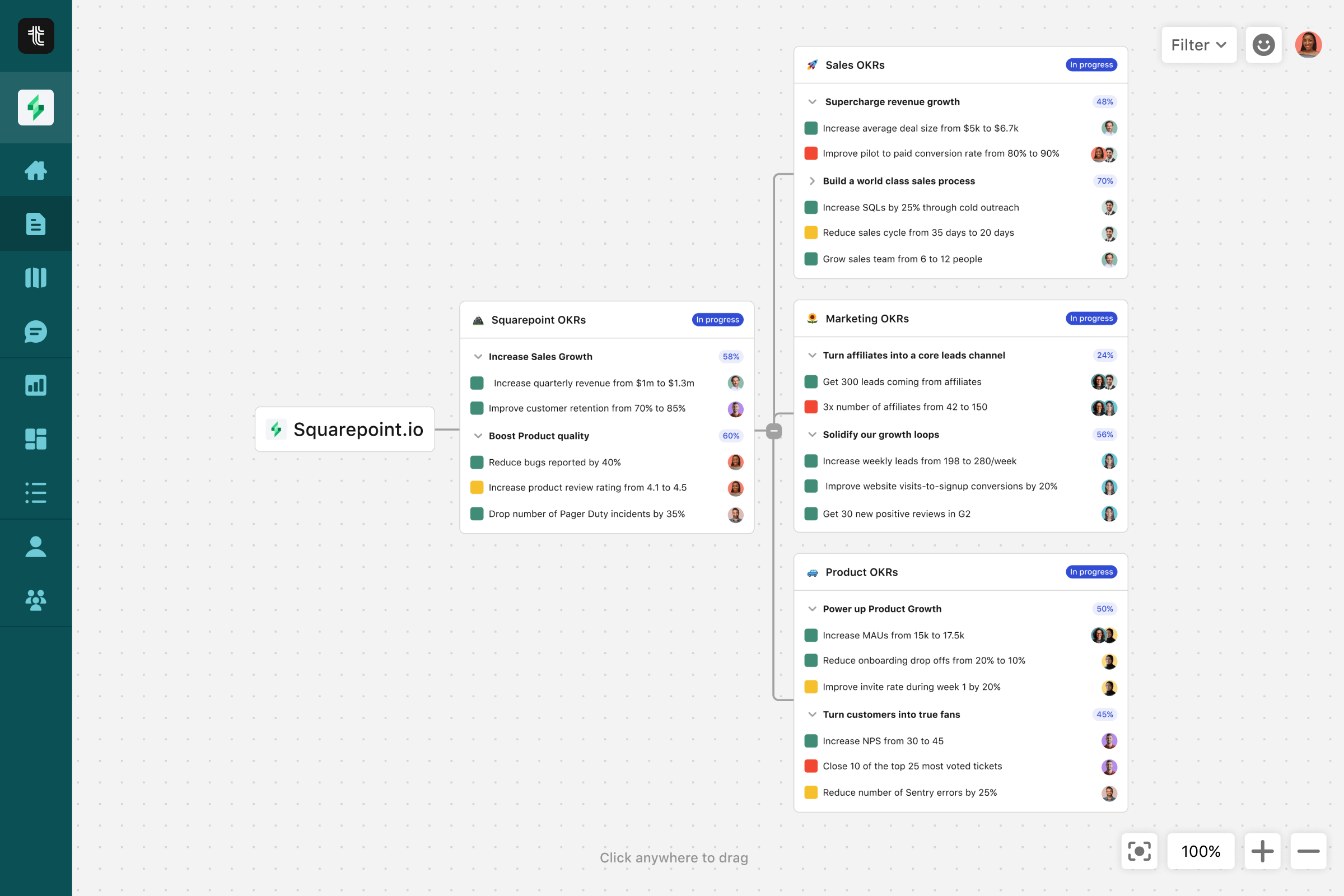
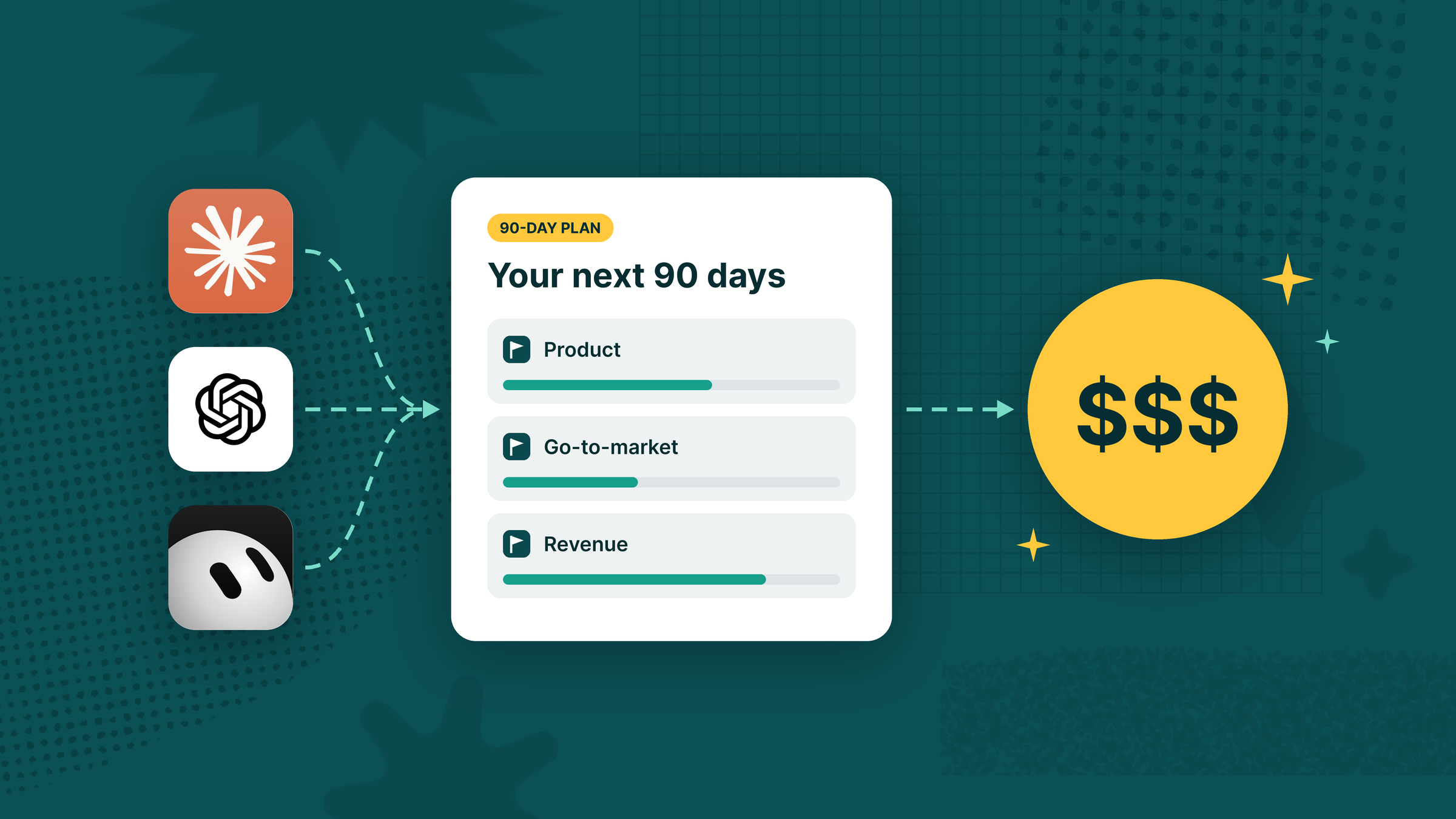
If you want a product that helps you organise and execute everything in this guide—define clear pillars, map company and team OKRs, link initiatives and tasks, and report by pillar—Tability does exactly that, with a built-in AI Agent (Tabby AI) to keep updates flowing and risks visible.
Conclusion
If you’re the organiser—the StratOps lead, Chief of Staff, or ops manager—the real win is turning a bold strategy into coordinated movement. Strategic pillars are how you do it. They give your organisation a shared frame of reference so decisions line up, resources flow to what matters, and progress tells a single story instead of a dozen disjointed ones.
Keep it simple and durable: define three to five clear pillars, map company and team OKRs to each, translate those outcomes into initiatives and tasks, then report by pillar so leaders and teams can see the same picture. Review lightly each year to confirm the focus, and adjust only when the strategy truly shifts.
Done well, pillars become the connective tissue between vision and execution—steady enough to outlast a quarter, practical enough to guide this week’s work. If you’re not sure where to start, pick one pillar, run a full OKR cycle beneath it, and let the learning shape the rest. That first small, well-aligned step is often all it takes to turn strategy into momentum.

.jpg)

.png)