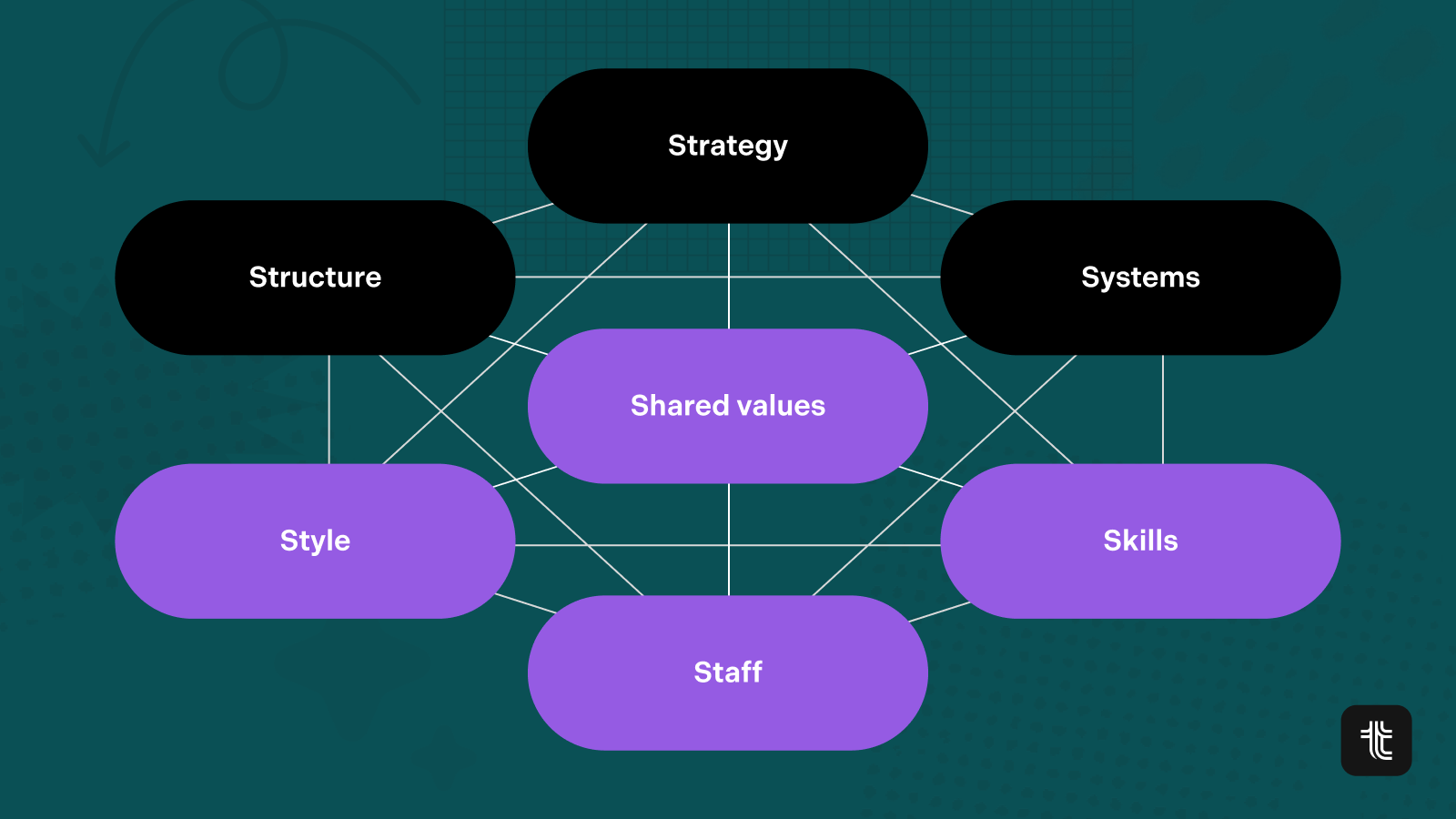
The McKinsey 7S Framework was created in 1980. Most consulting decks that reference it have not been updated since.
That is a problem. The framework itself is still one of the most useful organisational diagnostics on the planet. The way most teams use it is not.
The pattern looks like this. Someone reads a blog post or sits through a leadership offsite. They pull out the seven elements, run a quick workshop, fill in a chart, and then file the document away. Six months later the company has the same misalignment it started with, and nobody remembers what was on the chart.
If that sounds familiar, this guide is for you. We will cover what the McKinsey 7S Framework actually is, why most analyses do not stick, and how to use it as an operating tool rather than a one-off audit. The short answer: the 7S works best when it is wired into a StratOps cadence rather than treated as a standalone consulting deliverable.
What the McKinsey 7S Framework actually is
The 7S Framework is an organisational alignment model developed at McKinsey in the late 1970s by Tom Peters, Robert Waterman, and a few colleagues. It became famous when Peters and Waterman published In Search of Excellence in 1982.
The core idea is simple. Organisations have seven internal elements that all need to be aligned for the strategy to actually work. Get the strategy right but ignore the other six, and the strategy fails. Change one element without thinking about the others, and you create misalignment somewhere else.
The seven elements split into two groups.
Hard elements are tangible and easier to identify:
- Strategy: the plan to gain competitive advantage.
- Structure: how the organisation is arranged (reporting lines, divisions, hierarchy).
- Systems: the processes and procedures that get work done.
Soft elements are harder to define but just as important:
- Shared values: the core beliefs and culture (originally called superordinate goals).
- Skills: the capabilities of the organisation and its people.
- Style: how leadership behaves, the management style on display.
- Staff: the people, how they are recruited, developed, and retained.
The enduring insight is that the soft elements are usually what make or break the hard ones. You can have a brilliant strategy and a clean org chart, and still fail because the culture will not let it happen.
The seven elements, in practical terms
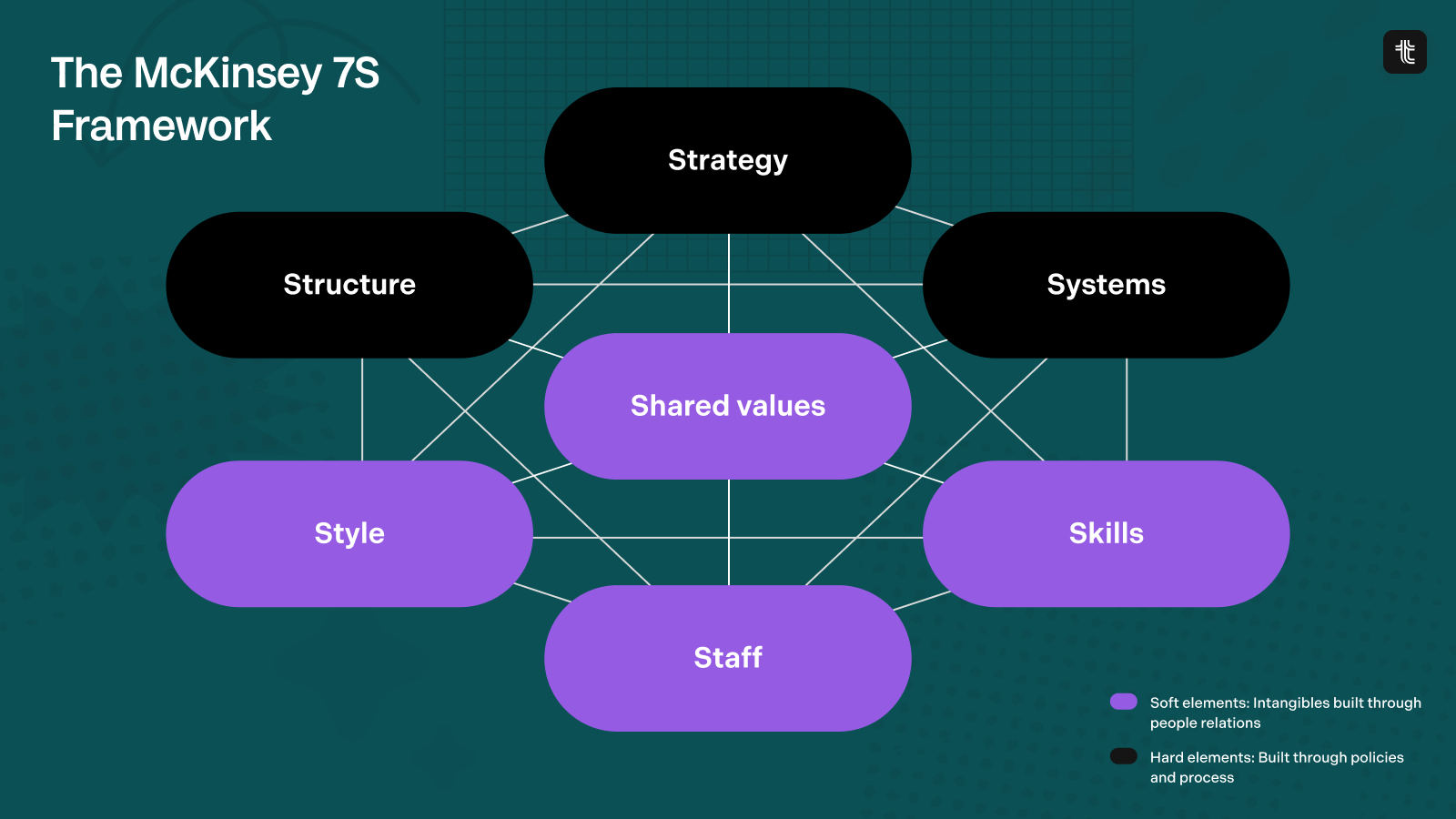
It helps to ground each element with the question it forces a team to answer.
- Strategy. What are we actually trying to win at, and how?
- Structure. Who reports to whom, and which teams own which outcomes?
- Systems. What recurring processes do we run, and what tools support them?
- Shared values. What do we genuinely believe as a company, not just what is on the wall?
- Skills. What are we provably good at, and what are the gaps?
- Style. How does leadership actually show up day to day?
- Staff. Do we have the right people, and how do we develop them?
The questions look obvious. The trap is in pretending you have answered them when you have not. Most organisations have a strategy document. Far fewer have an honest answer to: what does our leadership style reward, and is that aligned with our stated values?
Why most 7S analyses fail
Here is the uncomfortable bit. The 7S Framework is regularly run as a workshop, and just as regularly thrown out within a quarter. A few reasons.
It gets treated as a one-off audit, not a recurring check. Strategy shifts, people change, the market moves. A 7S analysis done once is a snapshot of yesterday.
Soft elements get hand-waved. Hard elements are easy to fill in. People skip past shared values and style with vague nouns ("collaboration", "ownership") instead of describing what actually happens. The whole point of the framework is that the soft elements are where alignment usually breaks. Skipping them defeats the exercise.
There is no owner. A 7S analysis usually surfaces 10 to 15 areas of misalignment. If nobody owns the follow-through, nothing changes. The chart goes into a Notion page and quietly dies.
It stays disconnected from the operating cadence. This is the big one. If your 7S analysis sits in a Google Doc and your team’s actual work is tracked in a different tool, the framework cannot influence anything that matters.
The fix is not to abandon the 7S. The fix is to plug it into how you already run the business.
How to actually use the McKinsey 7S Framework: a StratOps-friendly version
The most useful way to think about the 7S Framework today is as a diagnostic that feeds your operating system. If you are running strategic operations properly, the 7S becomes an annual or biannual checkpoint that informs your quarterly OKRs and your operating cadence.
Here is how to run it without the workshop-then-forget trap.
Step 1: Score honestly, not aspirationally. For each of the seven elements, write a one-sentence statement of where you actually are. Not where the leadership team wishes you were. Pull data where you can. For skills, look at hiring data and capability gaps that have surfaced in retros. For style, look at recent decisions and how they were made.
Step 2: Pair each element with the one most affected by it. Do not analyse the seven in isolation. The framework’s whole premise is interconnection. Strategy and structure. Skills and staff. Style and shared values. Find the two or three pairings where the misalignment is most painful.
Step 3: Pick three to five misalignments to actually fix. You will find more. Resist the urge to tackle everything. The teams that succeed with the 7S pick a small number of high-leverage gaps and run them as quarterly initiatives.
Step 4: Translate each misalignment into an outcome. "Style is inconsistent with shared values" is too vague to act on. "By end of Q3, every senior leader runs a weekly 1:1 with their direct reports and a monthly retro with their full team" is something you can track. The 7S identifies the gap. Your goal-setting framework (OKRs, KPIs, or whatever you already use) carries the work.
Step 5: Revisit on a regular cadence. Once a year minimum. Twice if you are scaling fast or going through a structural change. The 7S should not be the focus of your operating rhythm. It should be the periodic alignment check that informs it.
A worked example: a Series B SaaS company
Picture a 90-person SaaS company that just raised a Series B. They are moving fast, hiring fast, and the leadership team is privately worried that something is going to break. A 7S analysis might surface this:
- Strategy: move from product-led growth to enterprise sales. Clear.
- Structure: still organised functionally, with one VP per function reporting to the CEO. Designed for a 30-person company.
- Systems: sales process is rough. No formal pipeline discipline. Engineering planning still done in a Slack channel.
- Shared values: "move fast, customer first, no bullshit." Genuinely lived at 30 people. At 90, the new hires do not know what they mean.
- Skills: strong product and engineering. Thin on enterprise sales and customer success.
- Style: founder-led, fast decisions, direct feedback. Works for the first 20 hires. New senior hires struggle with the lack of structure.
- Staff: aggressive hiring. Onboarding has not kept up.
The misalignments are obvious once they are written down. Strategy (enterprise) does not match skills (PLG-era) or structure (functional). Style (founder-driven) is at odds with the scale they are growing into. Systems have not caught up with headcount.
That diagnosis would generate three to five quarterly outcomes. Maybe a sales operations build-out, a leadership development programme for new senior hires, and a structural reorg into pods. The 7S did not write the OKRs. It told the leadership team where to focus them.
When to reach for the 7S vs other frameworks
The 7S Framework is not the right tool for every job. Some quick rules of thumb:
Reach for the 7S when:
- You are going through a structural change, an acquisition, or rapid scale.
- Strategy execution keeps stalling and nobody is sure why.
- You have a clear strategy but suspect the rest of the organisation is not aligned to deliver it.
- You want a holistic snapshot rather than a deep dive on one area.
Reach for something else when:
- You need to choose between strategic options. The BCG matrix or scenario planning is a better fit.
- You are mapping how value flows through your business. A value chain analysis does that more directly.
- You are building the annual plan. Use a proper strategic planning process. The 7S can feed it, but it is not the plan itself.
- You are solving a performance problem inside a function. Look at operational excellence instead.
The 7S is a diagnostic. Use it where you would use an X-ray, not where you would use a scalpel.
Where Tability fits in
The hard part of the 7S Framework is not the analysis. It is making the misalignments you find translate into work that actually changes the company.
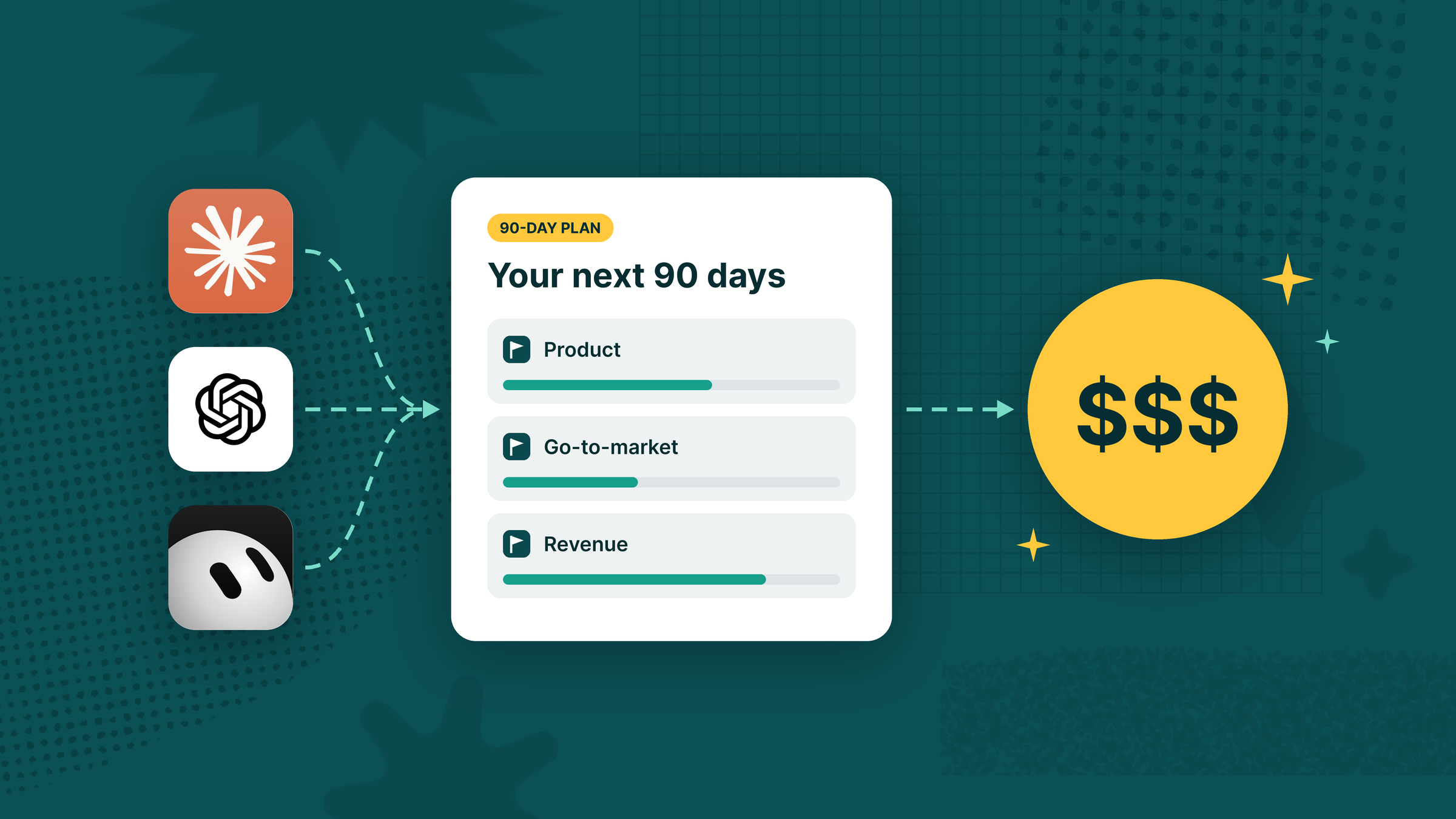
Tools like Tability are designed for exactly this. Once you have identified the three to five gaps to close, each becomes an outcome with a clear metric and an owner. The recurring check-ins keep the work visible to the leadership team. The framework gives you the diagnosis. Tability gives you the operating rhythm to fix it.
Customers who run a StratOps function often use the 7S annually as part of their strategic planning cycle, then carry the misalignments into their quarterly OKRs. That is the loop the framework needs to actually stick.
The takeaway
The McKinsey 7S Framework is older than most of the people running modern strategy teams. It is still useful, because the underlying insight is timeless. Strategy alone will not carry an organisation if the other six elements are not pulling in the same direction.
The version that fails is the one done as a workshop and filed away. The version that works is the one wired into how you already plan and execute.

.jpg)

.png)