Most competitive analysis tools look outward. Porter's Five Forces maps the industry landscape. SWOT catalogues external threats and opportunities. PESTLE scans the macro environment. VRIO does something different: it looks inward. It asks which internal resources your organisation actually has that competitors cannot easily replicate.
Developed by Jay Barney in 1991 from resource-based view theory, VRIO is a diagnostic framework for understanding the source of sustainable competitive advantage. Not "what market are we in?" but "what do we have that makes us hard to beat?" The answers tend to be more stable and more useful than most external analyses.
The gap most organisations hit with VRIO is that they run the analysis, identify their advantages, and then stop. This article covers how the framework works and, crucially, how to connect the output to a strategic plan that actually gets executed.
What is the VRIO framework?
VRIO stands for Valuable, Rare, Inimitable, and Organised. It is a structured way to evaluate your company's internal resources and capabilities to determine which ones are genuine sources of competitive advantage.
The framework is based on a simple idea from resource-based view theory: sustained competitive advantage comes from resources that are difficult for competitors to replicate. Having a good product is not enough if competitors can copy it in six months. Having a capable team is not enough if those people could be hired away tomorrow. VRIO pushes you to identify resources that are genuinely defensible.
ℹ️ VRIO is not about what you do. It's about what you have that makes what you do hard to copy.
.png)
The VRIO framework as a decision filter: a resource must pass all four criteria for sustained competitive advantage.
The four VRIO criteria explained
Each criterion is a filter. A resource needs to pass all four to qualify as a source of sustained competitive advantage.
Valuable
A resource is valuable if it helps the organisation respond to opportunities or defend against competitive threats. This is the baseline filter: resources that don't affect competitive position in any meaningful way can be set aside regardless of how impressive they seem internally.
The test is external: does this resource matter in the market? A world-class internal HR process is only valuable if it produces better talent outcomes than competitors can achieve. If it does not affect the organisation's competitive position, it is not valuable in the VRIO sense.
Rare
A resource is rare if it is held by few or no competitors. Value without rarity creates parity, not advantage. If all your competitors have the same technology, that technology is a competitive requirement, not a competitive advantage.
Rarity can be temporary. A rare resource that can be acquired or copied in two years provides a temporary advantage, not a sustained one. The rarity test is most powerful when combined with the next criterion.
Inimitable
A resource is inimitable if it is difficult or costly for competitors to replicate or substitute. This is the most important criterion for sustainability. Resources can be hard to imitate for several reasons: historical path dependence (the advantage was built over time and cannot be shortcut), causal ambiguity (competitors cannot identify exactly what creates the advantage), or social complexity (the advantage depends on culture, trust, or relationships that cannot simply be purchased).
Brands, proprietary data, deeply embedded culture, and network effects are among the most commonly inimitable resources. Physical assets and technology are generally less defensible.
Organised
Organisation is the execution criterion. A resource that passes the first three tests only generates advantage if the company is actually set up to exploit it. This means having the right processes, structures, incentives, and governance in place to capture the value.
Many companies discover through VRIO that they hold genuinely rare and inimitable resources but fail to exploit them because their internal organisation gets in the way. The organisational criterion is the bridge between analysis and action.
How to run a VRIO analysis: step by step
- Identify your resources and capabilities. Start by listing the key internal resources your organisation has: physical assets, intellectual property, financial resources, human capital, organisational processes, brand, data, and relationships. Be specific. "Our team" is too vague. "Our engineering team's expertise in real-time data processing" is useful.
- Apply each VRIO criterion in sequence. For each resource, ask all four questions. Use the table format above to keep track. A resource that fails at "Valuable" does not need to be tested further.
- Classify each resource. Resources that pass all four criteria are sources of sustained competitive advantage. Those that pass V and R but not I have temporary advantages. Those that only pass V are at competitive parity.
- Prioritise the sustained advantages. The resources that pass all four filters are your strategic core. These are the capabilities you need to protect, invest in, and build strategy around.
- Connect to your strategic plan. This is the step most VRIO analyses skip. Once you know where your sustainable advantages lie, the next question is how your goals and initiatives reinforce them.
VRIO framework examples
Apple: design and ecosystem integration
Apple's hardware design capability is valuable (customers pay premium prices for it), rare (few competitors match Apple's design-hardware integration), inimitable (it depends on decades of accumulated culture, talent, and process), and organised (Apple's entire supply chain and retail experience is built around delivering it). This passes all four VRIO criteria and explains why Apple has maintained premium margins in a commoditised hardware market.
Amazon: logistics infrastructure
Amazon's fulfilment network is valuable, rare (no retailer has built equivalent coverage), inimitable (the investment and operational complexity required to replicate it is enormous), and organised (Amazon's entire operational model is built to exploit it). It is also the foundation for AWS's physical infrastructure advantage.
A resource that fails VRIO: standard CRM software
A company that uses Salesforce and considers it a competitive advantage should test that claim with VRIO. The software is valuable (it helps manage customer relationships), but it is not rare (any competitor can buy the same tool), therefore it does not pass the VRIO test. It is a competitive requirement, not a competitive advantage.
VRIO vs SWOT: when to use each
SWOT and VRIO are complementary rather than competing. They answer different questions.
SWOT is an external-facing scan: strengths, weaknesses, opportunities, threats. It is broad by design, covering both internal and external factors. It is most useful early in a strategic planning process to map the landscape, identify priorities, and surface issues.
VRIO is an internal deep-dive. It takes the "strengths" component of SWOT and subjects it to rigorous scrutiny. Not all strengths are competitive advantages. VRIO separates the ones that are from the ones that merely feel good to list.
💡 Use SWOT to map the strategic landscape. Use VRIO to identify which of your internal strengths are genuinely defensible. They work best in sequence, with SWOT opening the conversation and VRIO sharpening the focus.
From VRIO analysis to execution: the missing step
VRIO is a diagnostic, not a strategy. The output is a map of your competitive advantages. What most organisations fail to do is connect that map to the goals they are actually working toward.
The connection works like this. Your sustained competitive advantages, identified through VRIO, should directly inform your strategic pillars: the two or three focus areas where your strategy will be concentrated. A company that identifies its data network as a sustained advantage should have a strategic pillar around data product development. A company whose culture is inimitable should have a pillar around talent and people investment.
From strategic pillars, the next step is setting measurable goals. This is where OKRs become the natural tool. Each pillar generates objectives (the strategic direction you are investing in) and key results (the measurable outcomes that tell you whether the investment is paying off). Without this step, a VRIO analysis produces insight but no change in behaviour.
The full chain: VRIO identifies where your sustainable advantages lie. Strategic pillars translate those into focus areas. OKRs make those focus areas measurable and trackable. Without completing the chain, the analysis stays in the strategy document and never reaches the people doing the work.
This is the most common failure mode for strategy frameworks generally. The analysis is thorough and the insights are real, but they never get converted into goals that teams are actually working toward. The question to ask after every VRIO session is not "what did we learn?" but "what are we going to measure differently as a result?"
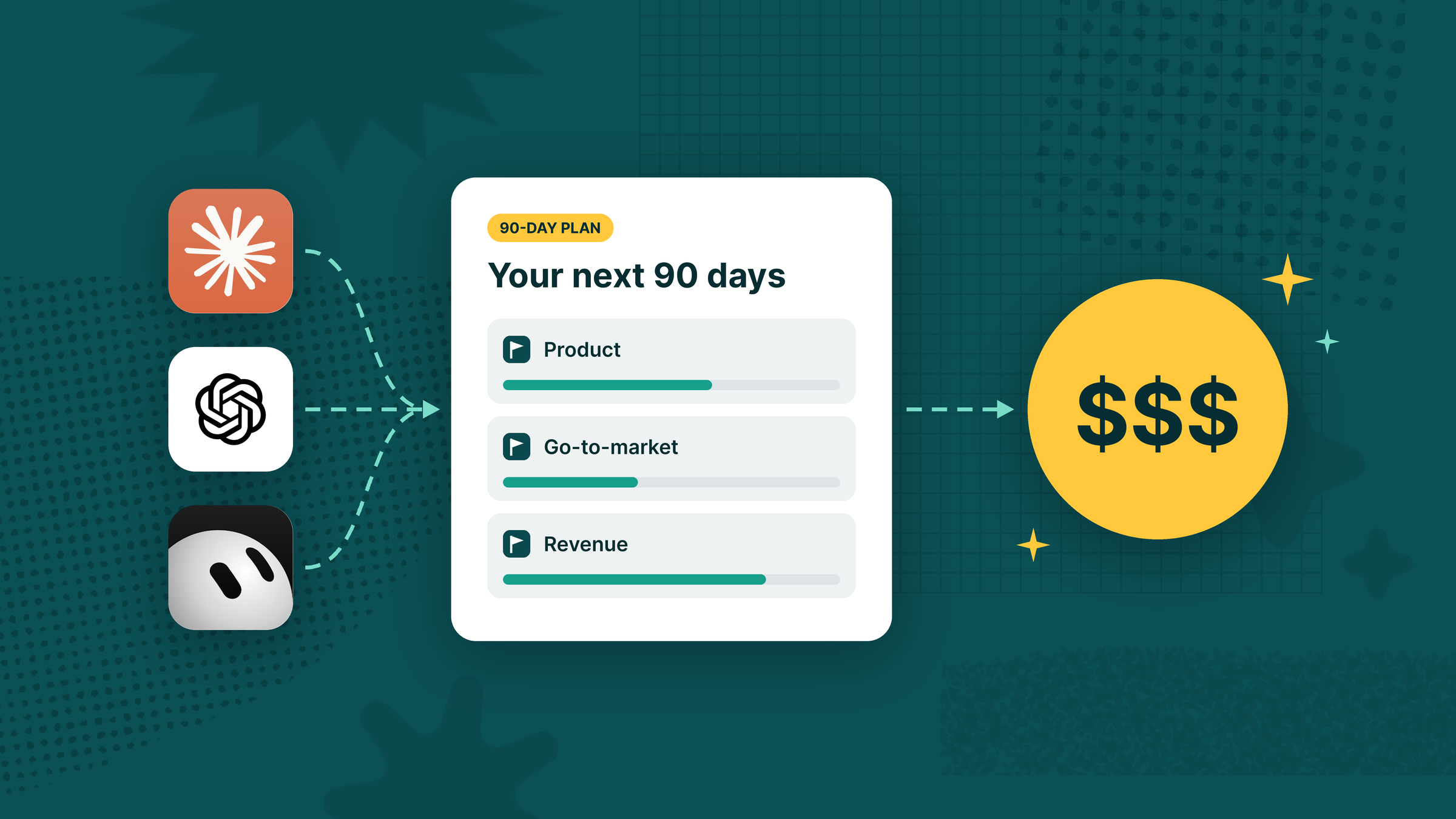
💡 Tability helps teams connect strategic analysis to measurable goals. Once you've identified your competitive advantages through VRIO, use Tability to build the OKRs and check-in cadence that keeps the whole organisation focused on protecting and extending them.
Try Tability free and see how your strategic priorities connect to the goals your teams are actually tracking, or book a demo to walk through it for your organisation.

.jpg)

.png)