Type "AI agent platform" into Google and you'll get a pile of developer frameworks, a Gartner reviews page, and three different "best of 2026" listicles arguing about the same twelve tools. What you won't find, in the first page of results or in most of the sales calls happening right now, is anyone asking the obvious question: agents for what, exactly?
That's not a small gap. Most of the platforms fighting for this keyword are optimised for a single job: making it easier to build an agent. Fewer are built for the job that actually matters to the business paying for it, which is making sure that agent's work adds up to something you can point to on a scoreboard.
We don't think that's a coincidence. It's the gap between a builder tool and a management tool, and it's the reason most "AI agent platform" comparisons end up being comparisons of the wrong thing.
What most "AI agent platforms" actually are
Search results for this term split into two camps that get talked about as if they're the same category.
The first is the builder camp: frameworks and low-code tools like LangGraph, CrewAI, Gumloop, and Make. These are genuinely good at what they do, which is letting a technical team wire up an agent's logic, tool calls, and handoffs. Best for: teams with engineering resources who want full control over how an agent thinks and acts.
The second is the enterprise conversational camp: platforms like Salesforce's Agentforce or Kore.ai, built around customer-facing bots and support deflection. Best for: large support or sales orgs replacing rule-based chatbots with something more capable.
Both camps answer "how do I build an agent". Neither one really answers "how do I know if the agents I already have are worth what they cost", which turns out to be the question that shows up in leadership meetings a lot sooner than anyone expects.
The real question: what is the agent trying to move?
Here's the pattern we keep running into. A team stands up an agent to draft support replies, or triage bugs, or write first-pass content. Within a month it's producing a genuinely impressive amount of output: tickets closed, drafts written, tests run. Someone asks whether it's working, and the honest answer is: we don't actually know.
That's the gap between outputs and outcomes, and it's not a new problem. It's the same gap that made OKRs useful for human teams in the first place: it's easy to measure that a team is busy, much harder to prove that the busyness is moving anything that matters. Agents just make the gap wider, because they can produce ten times the output of a person without anyone stopping to ask what it's for.
An agent platform that only helps you build faster makes this worse, not better. More agents, more output, same fuzzy line back to the business. The platforms worth paying for in 2026 are the ones that force the question at setup time: what result is this agent supposed to move, and how will we know if it did.
Where Tability fits
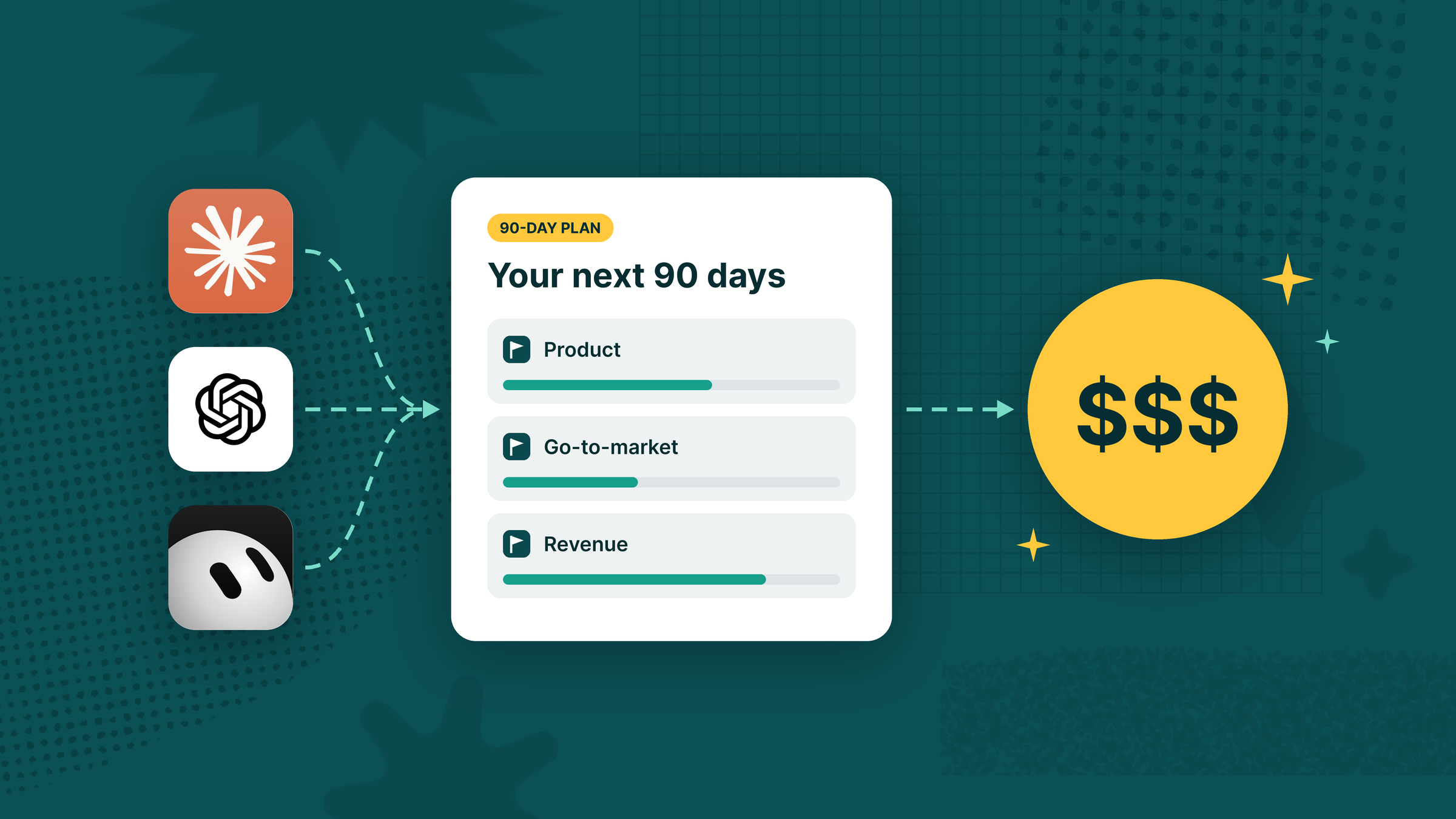
This is the lane Tability's AI Agent Manager plays in, and deliberately not the dev-framework lane above. Tability doesn't help you write an agent's logic. It assumes you've already got agents, built on whatever stack you like, and gives you the layer that ties each one to a real objective and key result, the same ones your human teams are already tracked against.
In practice that means every agent has an owner, a linked outcome, and a check-in history, the same accountability structure a person on the team would have. When an agent's output stalls, or a key result it's attached to goes red, that shows up as a normal part of the OKR review instead of a separate "AI usage" conversation nobody owns.
| Question | Builder platforms (LangGraph, CrewAI, Gumloop) | Tability Agent Manager |
|---|---|---|
| What it's for | Building and orchestrating agent logic | Tying agents to goals and reporting on progress |
| Who sets it up | Engineers and technical builders | Anyone who owns a goal or initiative |
| Success measured by | Tasks completed, workflows triggered | Movement on the linked key result |
| Where it lives | A separate agent-ops stack | The same OKR workspace as your human team |
We're not claiming this makes the builder tools redundant. If you need an agent to actually call APIs and make decisions, you'll probably still reach for one of them. What Tability replaces is the spreadsheet, or the Slack channel, or the nothing, that most teams currently use to answer "is this worth it".
What to check before you pick one
If you're evaluating AI agent platforms right now, a few questions cut through the marketing faster than a feature list:
- Does it assume you're building from scratch, or plugging in agents you already run? Most platforms assume the former. If you've already got agents scattered across tools, look for one built for the latter.
- Can a non-technical owner see what an agent is doing without reading logs? If the answer lives in a developer console, whoever owns the business result won't check it.
- Is there a goal attached, or just a task list? A task list tells you an agent is busy. A goal tells you whether that busyness matters.
- What happens when the agent's numbers go backwards? If there's no equivalent of a check-in or a red flag, you'll find out from a quarterly report instead of in the moment you could still fix it.
None of these questions show up in the standard "best AI agent platforms" roundups, because most of those lists are still written for the person building the agent, not the person who has to explain its ROI six months later.
Where this is heading
Gartner's own reviews of agent development platforms already show a crowded, fast-moving market, and the builder tools will keep multiplying because building agents keeps getting easier. That's exactly why the management layer matters more, not less: the bottleneck is shifting from "can we build this" to "do we know if it's working", and most platforms haven't caught up.
We wrote more on what happens when that management gap is left open in Don't let AI agents ruin your company, and on the broader outputs-vs-outcomes problem that agents inherited from human teams in Outputs vs Outcomes.
If you're building agents already and want a way to see whether they're actually moving anything, that's what Tability's Agent Manager is for. Sign up free and connect an agent to a real key result, or book 30 minutes with us and we'll walk through what it looks like for your setup. Tability or not, it's worth knowing the answer before your next budget review does.

.jpg)
.png)