.png)
AI agents are becoming a crucial part of the team.
From Intercom to Zapier to Atlassian, every product is introducing its own assistant — helping teams work faster, smarter, and with less friction.
Just about everyone at your company is probably using an LLM like ChatGPT or Perplexity to help them generate ideas, write content, code, generate images, etc. Asking your LLM questions has essentially become the new Google search…. But more personalised.
Knowing all this, we were not surprised when a Tability customer asked us this:

When we first started working on Tability, we dreamt of a tool that could automate progress tracking, help teams stay aligned and focused, and surface issues before they became fires. We dreamt of a tool that could export all the data, put it into artificial intelligence and ask it to summarise the whole dang thing.
At the time, that dream was well beyond what development and design could deliver...
But today, you can do all of that in Tability.
We’ve built the world’s first AI agent dedicated to assisting you through an entire OKR cycle—designed not just to assist in goal-setting but also to understand your goals, automate progress tracking, deliver intelligent insights and alerts, and keep your team moving in the right direction.
Meet Tabby – your personal OKR agent
Tabby isn’t just another AI agent—it’s the first agent built specifically to support the full OKR workflow week in and week out.
While most AI tools help answer questions or write content, Tabby is plugged into your OKR data and all the context surrounding your goals. They know what success looks like, understand your progress over time, where the data is coming from, and know who and what’s involved in getting you closer to your targets.
What can Tabby do?
In short, Tabby can drive your entire OKR process. From setting better goals, keeping progress, to writing reports, Tabby will maintain and execute on the aspects of OKRs that usually just feel like busy work.
.png)
While that may not sound life-changing, the hardest part about OKRs is often the process and the diligence required to sticking with them. OKRs are inherently simple. It’s the simple things that are often the biggest hurdles in OKRs — doing weekly check-ins, getting buy-in from the entire team, gathering data and writing summaries etc.
While it’s a lot of simple busy work, the result of it all is a wealth of progress and work data that you can utilise to make your next business decisions. This is the ultimate payoff and why OKRs are so important to a business.
In detail, Tabby AI will:
- Understands your OKRs: While most LLMs can do most of what Tabby does, they don’t have access to data and context. In seconds, Tabby can digest all the goals, tasks, people involved, previous check-ins, known benchmarks, and more, to give you the best possible analysis.
- Check-ins are always updated: Automate your check-ins so that if your team forgets to update their goals, Tabby steps in with smart summaries based on previous data.

- Spotlight things you should know and identify risks: Tabby will try to connect the dots and understand what you care about most. So whether it’s something you’re watching closely, or had no idea even existed, Tabby can flag it and let you know if it’s something related to your work.
- Automate reporting: Tabby can create full digests of your OKR progress, considering all the latest and previous check-ins, progress data, trends, and give you a one-pager that you could send to a stakeholder with confidence. Build on-demand or have a scheduled one sent out on your reporting schedule.
With Tabby, you’ll never let another important alert slip through the cracks, putting out fires before they even start.
Data and Security
While AI opens up exciting new possibilities, it also raises important questions about privacy and data protection. Your business strategy, goals, and metrics are among your most sensitive assets, and we treat them that way.
We’ve built the entire Tability platform with security and compliance at the core. Your data is never used outside the Tability platform and is never shared with external systems for training or analysis. We offer deployment options in both EU and AU clouds and are GDPR-compliant to ensure your data stays safe and local. Check out our trust and security section for more information.
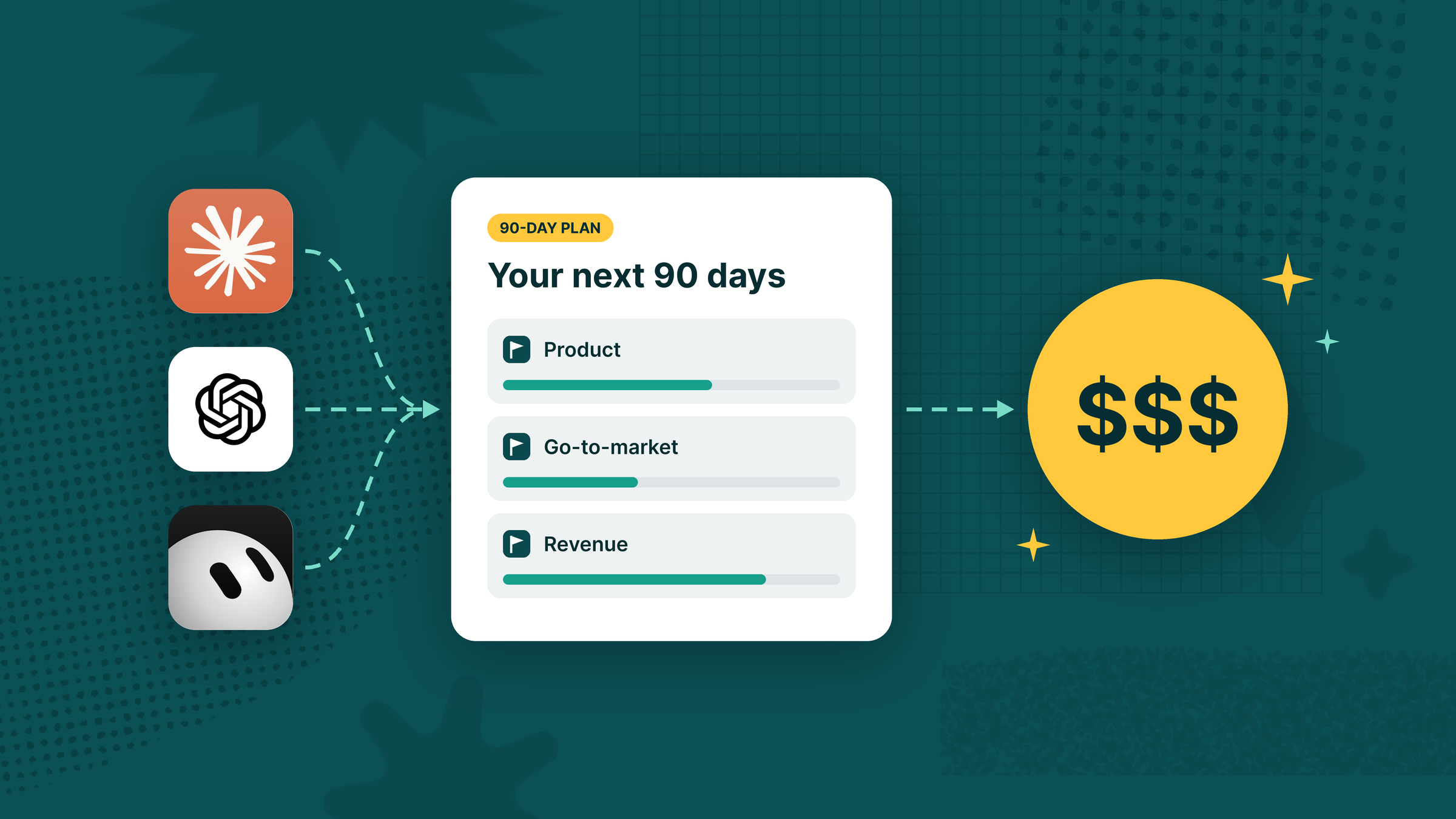
Tability uses OpenAI API to generate the analysis of your goals. We have carefully selected OpenAI for specific security reasons to make sure that your data is protected (refer to OpenAI's API Data usage policy for more information).
- The data sent to OpenAI is not used to train their model.
- The data sent to OpenAI is deleted after 30 days.
- Their model is one of the most advanced, and can produce in depth analysis of progress.
Lastly, no matter your team’s comfort level with AI, you’ll always have full control. Tabby is optional and can be turned off completely at any time.
More: How to turn off AI in my workspace →
Set and connect in 3 easy steps
With Tabby, setting and tracking OKRs is easier than ever. With AI assistance and automation at every step of the way, you’ll save a ton of time that you would usually spend on OKR admin and process management.
Step 1: Set better goals with AI
This is nothing new for us, but we Tability has the best AI goal editor on the market. Why is it the best? Well let me tell you.

It all starts with the format. The editor, way before we ever had AI integrated with it, was built like a text editor. That’s because it’s a much easier way for us to think and get our thoughts out on paper. Without taking too much time to think about your formatting, you can start typing and let Tability format it properly for you later.
Now, jumping into the AI aspects. There are a few parts to it:
- Import goals from anywhere: Already have goals elsewhere? Great. Our editor can import goals from anywhere. Using AI, you can upload a spreadsheet, image, screenshot, Google Doc, and Tability will recognise it, translate it, and format it properly to use in the product.
- Generate detailed OKRs: Starting from scratch? Our in-app OKR generator can help you come up with some ideas. Give it a prompt like “goals for an SEO marketing team” or “I want to build an MVP of our product”, and that’s all it needs to work its magic. Want to customise it further? Chat with Tabby and get
- Auto-detect metrics: Setting measurable goals is key. Tabby can take a goal that you’ve written in plain english and extract, targets and start points for your data. It seems simple enough but when you have OKRs for an entire org, this saves hours!
👋Wanna try a light-weight version of it for free? Try our SMART goal generator
Step 2: Connect your tools, automate tracking
Where does your data live? The typical process for writing a good OKR check-in goes like this:
- Go to your data source and find the latest value for your goal.
- Go to your OKR software or OKR spreadsheet to record that value.
- Analyze your results and write a check-in about what happened in the past week.
- Gather more data to back up your analysis.

Simple enough maybe, but there’s a ton of tedious work and data gathering in there. Sometimes this is an hour of your day if you’re really trying to be thoughtful about it.
Tabby can make this entire tedious process automated.
Using data connectors, you can integrate with tons of your tools natively in Tability. What a data connector does is periodically pull the latest metric from your tool of choice and create a data point on your key results progress.

Tabby can then take that data and generate an OKR check-in for you. Analysing your progress with questions like:
- How far are we from our target? Will we make it?
- How much progress was made from last week? Why?
- What’s been done so far (based on past check-ins, objectives, comments, tasks completed, etc.) and how has that effected progress?
- What can we try next? What should we be thinking about next?
With Tabby, you’ll never have missing progress data or check-ins. If a team member forgets a check-in, or is on vacation, Tabby will fill in the holes. Theoretically, Tabby can even put your entire OKR tracking process on autopilot so that you never even have to do the check-ins at all.
Step 3: Generate reporting
Lastly, what do we do with all this data that Tabby is helping us gather and organise? Well, usually this is where you do an OKR review with your team, or you create a powerpoint or PDF with the latest progress/analysis to send to your boss, manager, investor, etc.
Spoiler alert: Tabby can automate that too.

With AI-generated retrospectives, Tabby can generate a report based on past check-ins and progress data. This is where all those automated check-ins come in handy – more data = better reports.
You may think that this is just another gimmick AI-generator, but we use this tool internally at Tability and it’s surprisingly good. It all depends on the data you’re feeding it, but it’s capable of taking so much data and processing it so much faster than we are.
Step 4: Flag issues and surface things you should care about (but maybe don’t even know about)
The next phase of Tabby is about curating an experience right for you. When you’re part of a massive org, there are A LOT of moving parts. It’s often hard to find the things you care about, let alone things you weren’t looking for that you might care about.
Using affinity scoring, Tabby will be able to find things that are most closely related to you and your goals. An issue that’s related to something you own? Tabby will point it out. A goal that’s not aligned with yours but maybe should be? Automate that cascade.
Answering questions like:
- What’s happening in the plans/teams I’m watching/part of?
- What’s happening with the people I work closely with?
- What’s happening in goals that are related or similar to mine?
- What’s going on with my direct reports and their direct reports?
These are the exciting things that AI can help us do that other OKR software out there just can’t do.
What’s next?
Building Tabby as an AI Agent that can digest huge amounts of progress data is the first step toward unleashing possibilities in strategy operations. The way AI is evolving so quickly, it’s hard to say what Tabby may be capable of in a year or two. Whatever the technology unlocks in the next few years, Tability is built with the changing AI times in mind.
We’re excited about all that Tability can offer now, but we're even more excited about how it can help businesses achieve more in the AI-powered future. Try it out and let us know what you think.

.jpg)

.png)