
Ask five people what an operational plan actually is and you'll get five different answers. Ask a sixth and they'll just hand you a strategic plan with a new cover page stuck on the front.
That's not really their fault. The two documents genuinely overlap, and most templates floating around online don't bother explaining where one stops and the other starts.
It matters more than it sounds like it should. Get the boundary wrong and you end up with an operational plan that's really just the strategy restated (too vague for anyone to act on), or a strategic plan that reads like a task list (too granular to guide an actual decision). Neither one does its job.
Here's the real difference between an operational plan and a strategic plan, where the annual operating plan sits in between the two, and what it actually takes to stop either one turning into a document nobody opens again after week one.
What is an operational plan?
An operational plan is the document that spells out how a team, department or function will run, day to day and quarter to quarter, to support the wider strategy. Some people call it an operations plan instead. Same thing.
It's scoped to a function, not the whole company: marketing, sales, engineering, support, whatever team is writing it. And it deals in specifics rather than direction: who owns what, what gets delivered by when, what resourcing is needed, what the workflow actually looks like week to week.
If a strategic plan tells you the destination, an operational plan is closer to the roster, the shift schedule and the maintenance log for the vehicle getting you there.
What is a strategic plan?
A strategic plan sets direction. It's the three-to-five-year answer to where the company is going, which market position it's chasing, and which big bets it's willing to make (and, just as importantly, which ones it isn't).
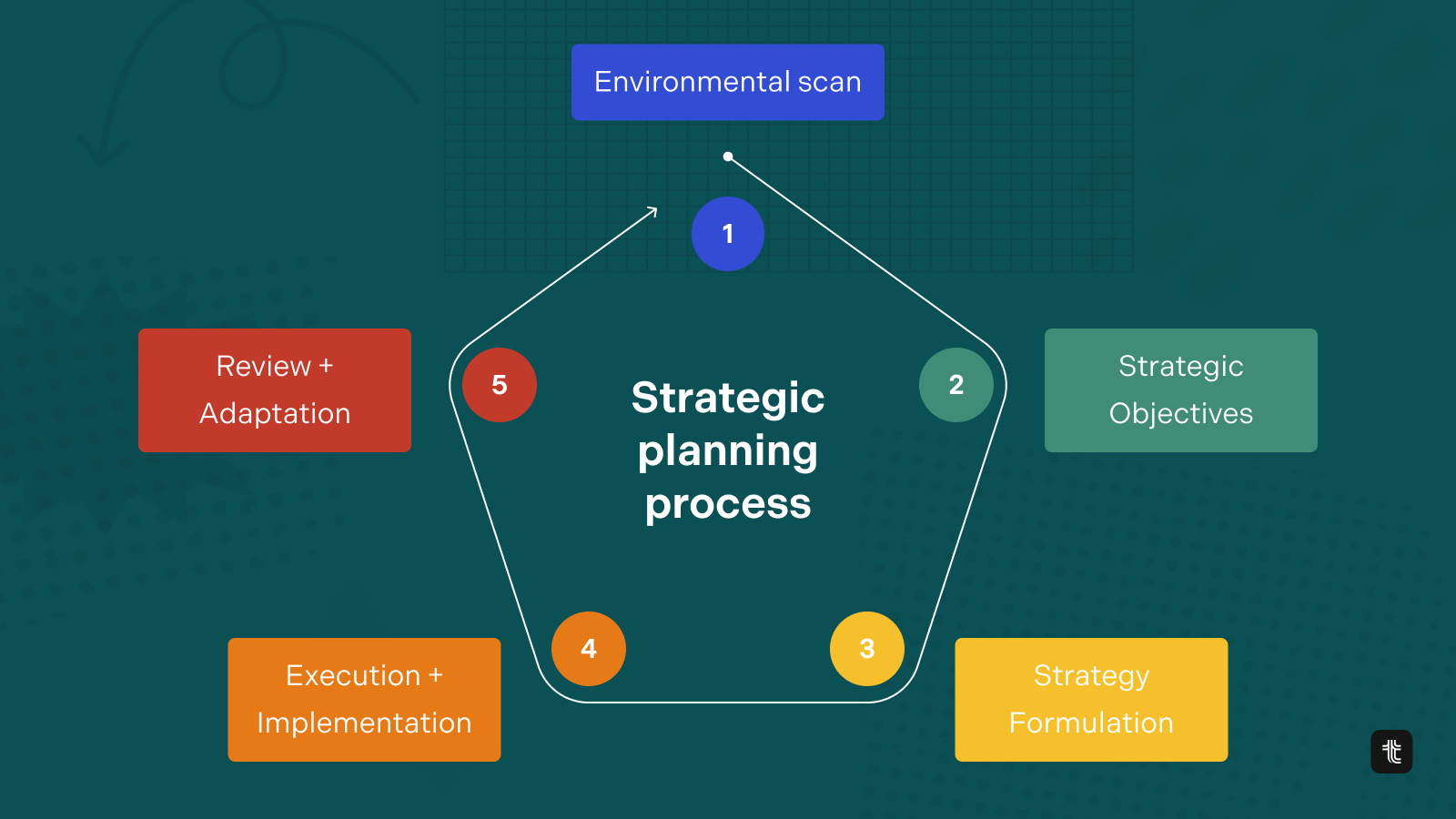
It answers 'where are we going and why', not 'who's doing what on Tuesday'. A good strategic plan should still make sense if you read it again in a year. A good operational plan almost never will, because the work underneath it moves too fast to stay static that long.
Operational plan vs strategic plan: the real differences
Side by side, the split looks like this:
The pattern running through all six rows: an operational plan is narrower and shorter-lived on purpose. That's not a weakness. It's what lets a function move fast without waiting for a strategy refresh every time something changes on the ground.
Where does the annual operating plan fit in?
This is usually where the confusion actually starts, because there's a third document sitting between the two: the annual operating plan (AOP).
The AOP is the company-wide, one-year translation of the strategic plan into budget lines and OKRs. It's still company-wide (like the strategic plan), but it's scoped to a single year (like an operational plan). Think of it as the middle layer, not a competitor to either document.
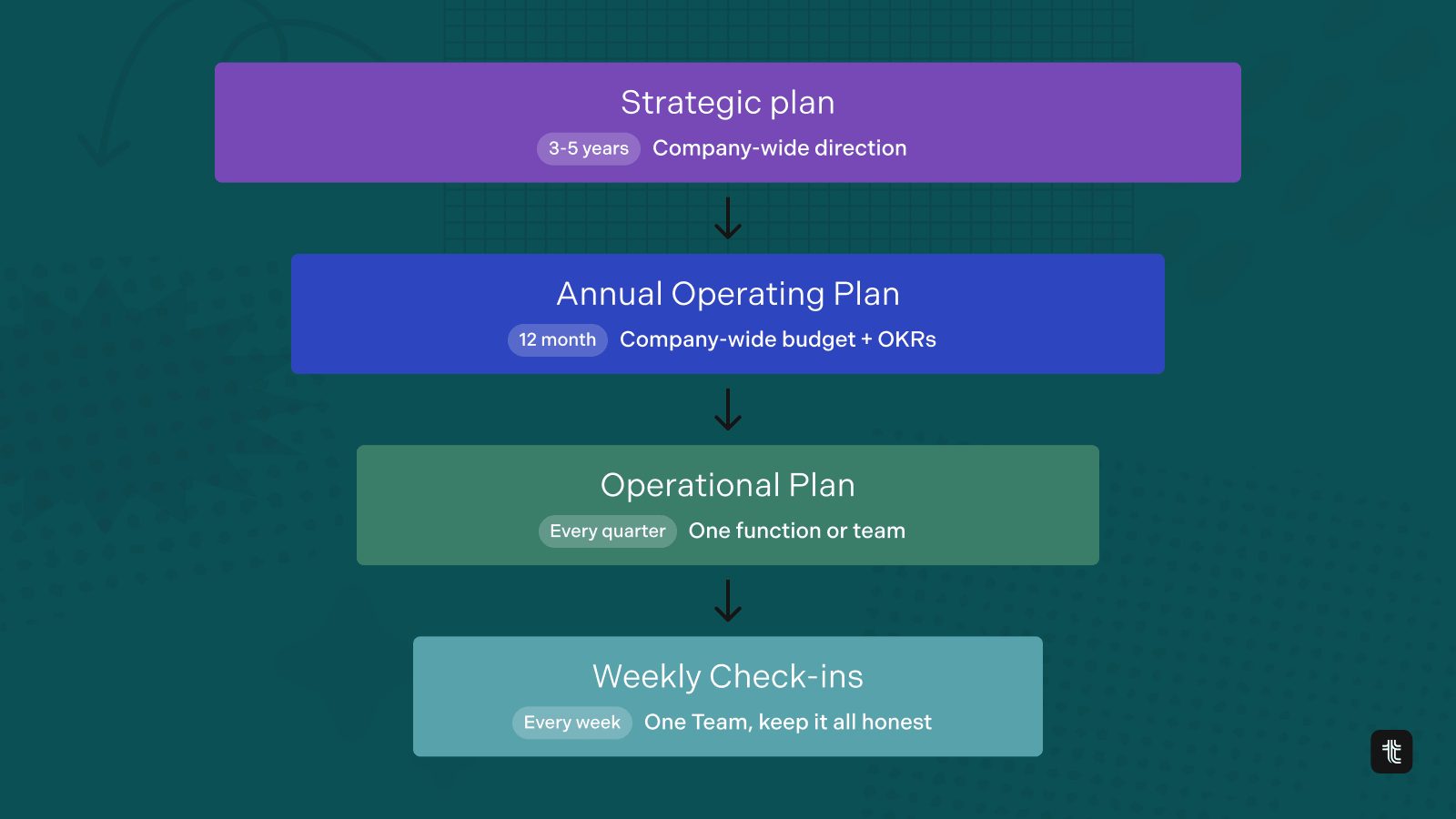
Each function's operational plan should nest inside the AOP, not compete with it. If marketing's operational plan and the AOP disagree about headcount or priorities for the quarter, that's a sign one of them is out of date, not that the company has two valid plans running at once.
What a good operational plan actually contains
Strip away the template jargon and a solid operational plan needs five things, no more:
- A named owner. Not a team name, an actual person accountable for it.
- Quarterly OKRs that tie back to the annual operating plan, not a wishlist invented from scratch.
- Resourcing: headcount, budget and tools the plan actually assumes are available.
- The workflow itself: how work moves from planned to done inside the team.
- A review cadence, written into the plan itself, not left as an afterthought.
Miss the last one and everything above it slowly stops being true.
📦 Related article: Operating Model Basics
Why operational plans go stale (and how to stop it)
The failure mode is always the same. The plan gets written once, usually right after the strategic planning offsite, gets filed somewhere, and gets opened again only when the next cycle rolls around. Nobody updates it because updating it was never part of anyone's week.
The fix isn't a better template. It's a cadence. Tie the operational plan to a running set of OKRs and weekly check-in meetings so it gets touched every week instead of once a quarter. A plan that's reviewed weekly can absorb reality as it changes. A plan that's reviewed quarterly just gets more wrong until someone finally admits it and starts over.
This is exactly the gap StratOps exists to close: the function that keeps strategy, the AOP and every team's operational plan actually talking to each other on a schedule, rather than reconciling them once a year and hoping nothing drifts in between.
Tools like Tability are built for exactly this: one place to hold the OKRs an operational plan is meant to deliver, run the weekly check-ins that keep it honest, and see straight away when a function's plan has quietly drifted from the AOP sitting above it.
The short version
A strategic plan says where the company is going. An annual operating plan turns that into a one-year, company-wide budget and OKR set. An operational plan is one function's version of how it'll actually get done this quarter. Different scope, different time horizon, different owner. Confuse them and one of the three stops doing its job.
Sign up free or book 30 minutes with us and we'll help you figure out what that looks like for your team. Tability or not!


.jpg)
.png)