
We hear it all the time: “You need to be more goal-oriented.” It shows up in performance reviews, job descriptions, and self-help books. But what does it actually mean, especially in a work context?
At its core, being goal-oriented (or outcome-driven) means that a clear destination guides your work. You’re not just working for the sake of being busy. You’re working with a purpose. For professionals, this mindset is often the difference between making real progress and simply going through the motions.
Whether you’re an individual contributor, a team lead, or running a company, developing a goal-oriented approach helps you prioritise better, stay motivated, and ultimately drive more meaningful results.
What does it mean to be goal-oriented?
Being goal-oriented at work means focusing on outcomes, not just activity. It’s the mindset of working with purpose — knowing where you’re headed, why it matters, and aligning your daily actions to get there. This applies both at the individual level (your personal performance) and the team or organisational level.
For individuals, being goal-oriented often looks like having a clear sense of what success means to you — whether it’s hitting a performance target, improving a skill, or growing into a new role. You’re intentional about how you spend your time, and you regularly check in on your progress. Goal-oriented people don’t just work hard — they work on what matters most. They might use systems like:
- Personal goals or OKRs to track progress toward outcomes that matter to them
- Daily standups or weekly check-ins to stay aligned with bigger goals
- Accountability check-ins with a mentor, peer, or manager
- Time-blocking or planning tools to protect time for deep, high-impact work
At the team or company level, goal-oriented organisations use systems and rituals to stay focused on what matters most. These might include:
- OKRs (Objectives and Key Results) – A popular framework for aligning team and company goals with measurable outcomes. It’s a clear sign of a goal-oriented culture when people can tie their work to higher-level objectives.
- SMART goals – Goals that are Specific, Measurable, Achievable, Relevant, and Time-bound. These help teams set focused, actionable targets rather than vague intentions.
💡Tip: You can use these SMART goal examples to get a better understanding. - Regular check-ins and progress reviews – Goal-oriented teams don’t just set goals once; they revisit them often. You adapt goals based on new data and discoveries, celebrate wins with your team, and learn from setbacks.
- Outcome-based roadmaps – Instead of tracking only tasks and features, these teams define success based on results, such as customer adoption or revenue impact.
- Clear prioritisation – Time and resources are allocated based on what drives progress toward defined work goals, not just what feels urgent.
- Reporting and sharing progress – whether it’s a manager or an investor, just about everyone has a stakeholder that’s interested in the work they’re doing. Using a reporting tool or having regular reports on how you progress towards a goal keeps everyone on the same page.
When these behaviours are in place, it’s easier for teams to stay aligned, move in the same direction, and evaluate progress based on real outcomes, not just activity.
Being goal-oriented doesn’t mean you stop doing tasks. It means your tasks serve a clear purpose — they’re stepping stones toward something bigger.
Task-oriented vs goal-oriented
Being task-oriented (or output-focused) is often where most people — and most startups — begin. It’s about getting things done quickly, trying whatever comes to mind, and seeing what sticks. This kind of execution-first mindset can be a strength in high-pressure or early-stage environments. You move fast, stay busy, and respond to immediate needs without overthinking. It’s less analytical, more reactive, and often driven by instinct or urgency.
Over time, task orientation shows its limits, especially as your role expands or your company matures. You might be checking off dozens of weekly tasks, but still feel like nothing meaningful is moving forward. Without a clear work goals, it’s easy to get caught in cycles of shallow work — always doing, but rarely progressing.
That’s where the shift to being goal-oriented becomes essential. As you step into more strategic responsibilities — whether aiming for a leadership role or building out systems in a growing business — success becomes less about volume and more about outcomes.
You start asking: What are we trying to achieve? What’s working, what’s not, and what should we focus on next?
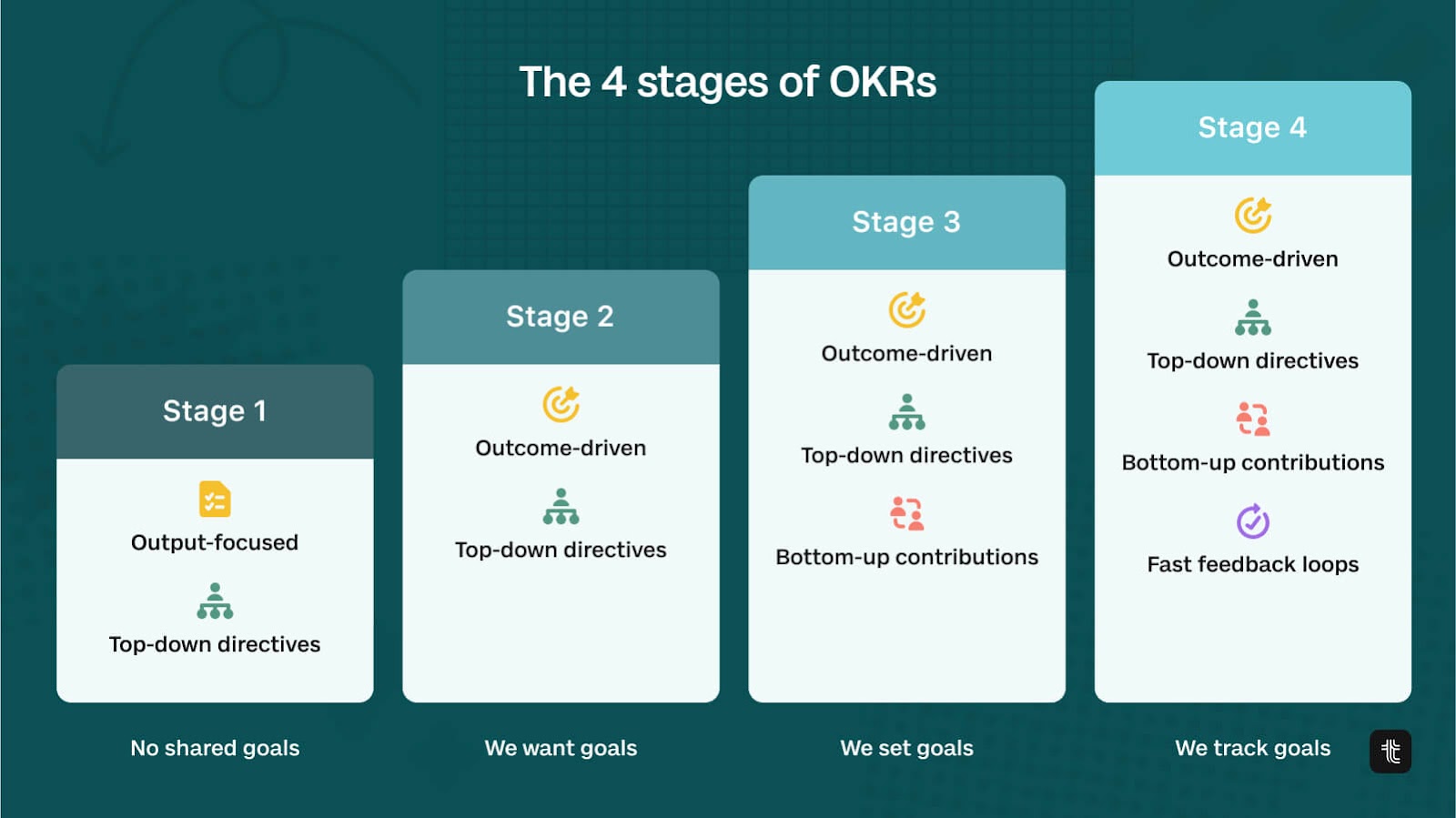
This evolution mirrors how teams mature over time as well. Teams will naturally move from having no shared goals (or OKRs) to setting and eventually tracking outcomes as a core part of their workflow. Early stages are often marked by high task volume and low alignment, but as teams become more goal driven, they shift from reacting to choosing their direction with intention.
Goal-oriented people apply this same thinking to their work. They prioritise based on impact, plan with the end in mind, and measure success by results—not just effort. This mindset reflects growth, maturity, and long-term thinking.
💡Tip: For a better understanding between tasks and goals, check out an in-depth guide on the differences between outputs vs outcomes.
How to be more goal-oriented at work
Being goal-oriented isn’t about a personality type — it’s a mindset and a set of habits you can build over time. Whether you’re an individual contributor or leading a team, becoming more goal-oriented will help you focus on what matters and move your work forward with purpose.
Here are six ways to start developing a goal-oriented approach in your day-to-day work:
1. Get clarity and direction
You can’t be goal-oriented if you don’t know where you’re going. Start by setting clear objectives for your tasks and projects. These could be personal goals, performance goals, team targets, or company-level OKRs.
Ask yourself:
- What am I trying to accomplish?
- How does this connect to the bigger picture?
- What does success look like?
Knowing the “why” behind your work helps you make better decisions about how to do it. To ensure clarity in your goals, it’s worth understanding the difference between vision and mission, which helps ground your purpose before setting outcome-based objectives.
2. Execute proactively
Don’t wait for direction — move things forward on your own. Goal-oriented people don’t just follow instructions; they take ownership of results. Break larger goals into manageable steps, build a plan, and take initiative to get started.
If something is unclear, don’t pause—ask questions, propose a solution, or start testing. Action breeds momentum.
3. Practice accountability
Being goal-oriented means owning the outcome, not just the effort. When things go wrong, take responsibility and focus on how to fix it. That kind of mindset builds trust and creates a culture where people solve problems instead of making excuses.
Start small: Write down your goals, share them with a peer or manager, and review your progress regularly. Even a quick weekly check-in can help you stay on track. Depending on the types of goals, using an accountability app will help you stay focused on your goals.
4. Improve your time management
Without goals, it’s easy to spend time on tasks that feel urgent but aren’t important. When you’re goal-oriented, your time becomes a resource you manage intentionally.
Use techniques like time-blocking or the Eisenhower Matrix to prioritise tasks that directly contribute to your goals. Protect your schedule from busywork by asking: Is this helping me reach my objective?
5. Focus on performance and growth
One of the biggest benefits of being goal-oriented is the opportunity to grow faster. Managers and teams value people who deliver results, not just activity. So set measurable goals, track your outcomes, and look for ways to improve each cycle.
Even better — reflect on what worked, what didn’t, and what you’ll do differently next time. That habit turns good execution into consistent progress.
6. Align with your team
Goals aren’t achieved in a vacuum. When teams are aligned around shared outcomes, collaboration becomes easier, and communication becomes sharper. That’s why tools like OKRs and shared dashboards exist—they help everyone stay on the same page.
If your team isn’t using a formal goal-setting framework, start by simply making your goals visible and asking others about theirs. Alignment starts with transparency.
Beyond just using a common goal framework, using something like OKRs can help you align goals from the top-down. Cascading OKRs means that your teams at the bottom are all aligned to the top, sharing incentives, purpose and direction that move the entire company forward.
How to stay consistent with your goals
Setting goals is a great start, but staying consistent is where real progress happens. Many people lose momentum not because they lack motivation, but because they haven’t built systems to support their focus.
Here are four ways to make goal-setting a lasting part of your work, not just a once-a-quarter ritual.
💡Tip: Setting goals? Try our goal setting template.
1. Make your goals visible and front of mind
If your goals live in a doc you haven’t opened in weeks, they might as well not exist. Visibility is a simple but powerful form of accountability. Whether you use a physical whiteboard, a notes app, or a shared team tool, keeping your goals in front of you helps reinforce priorities day after day.
For teams, using shared OKR dashboards or a goals board in your project management tool ensures everyone stays aligned. Writing your top three goals at the start of each week can be enough to re-focus your attention.
It can even be as simple as a daily, or weekly, reminder in your calendar to make sure you reflect on goal progression.
When your goals are visible, it’s easier to say no to distractions and remember what matters most.
2. Build regular check-ins and reflection loops
You don’t need complex workflows to stay on track, but you do need rhythm. A consistent check-in schedule (weekly, biweekly, or monthly) gives you space to step back, evaluate progress, and reset if needed.
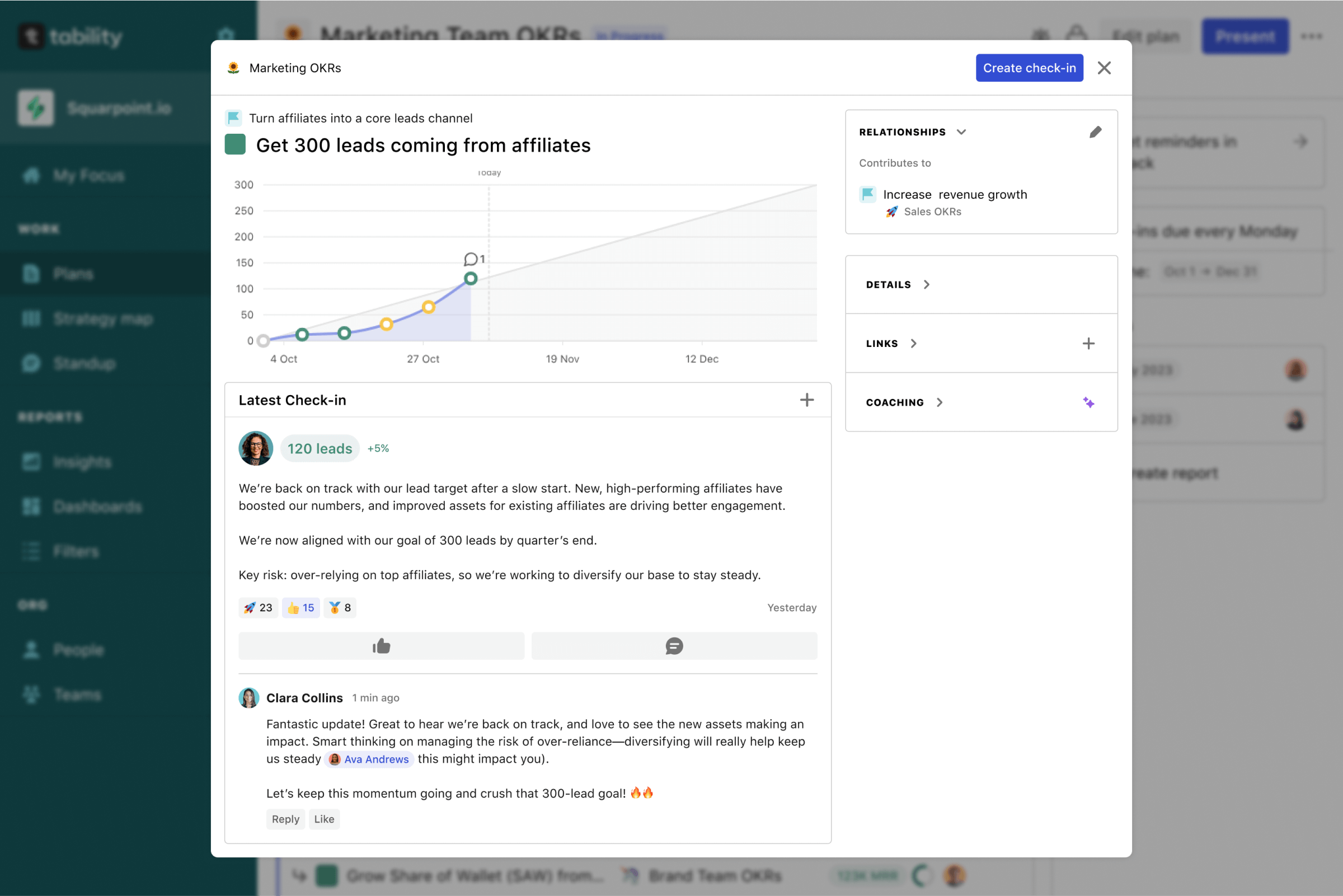
This weekly check-in is a staple of good OKR tracking but applies to all goals.
Spend a few minutes daily or weekly to ask yourself:
- What did I accomplish toward my goal?
- What went well? What didn’t go so well?
- What do we do next? How do we improve/fix things?
Teams can integrate this into sprint reviews or standups, while individuals can create a simple Friday reflection habit. The goal isn’t perfection — it’s continuity. A regular loop of review and reset helps prevent goals from drifting into the background, while also informing what tasks are to be prioritised.
3. Break big goals into milestones and celebrate progress
One reason people abandon goals is that they feel too big or far away. Breaking goals into smaller milestones creates momentum and helps you feel progress. These checkpoints give you tangible wins to celebrate and clarify your next step.
If your goal is to improve team onboarding, don’t just wait to launch a new program — celebrate smaller wins like completing interviews with new hires or documenting one key workflow. Every milestone completed reinforces your direction and motivates you to keep going.
Plus, small celebrations — even informal ones — help create a positive feedback loop that keeps you moving forward.
4. Stay flexible, but stay committed
Being goal-oriented doesn’t mean you can’t change your mind. Rigid goals can become a trap if you cling to them when the situation changes. The key is to stay committed to the outcome while remaining flexible in your path to get there.
Maybe your initial approach to a project didn’t work. Or a higher-priority goal emerged. That’s not failure — that’s adaptation. What matters is that you continue making deliberate decisions based on outcomes, not just reacting to the latest request or fire.
Regular goal reviews and give yourself permission to revise, drop, or replace them. Just make sure it’s intentional — not avoidance dressed up as change.
Conclusion: Being goal-oriented is a mindset you can build
Being goal-oriented at work isn’t about having the perfect plan or always hitting your targets — it’s about bringing intention to your work. It means choosing outcomes over busyness and consistently aligning your actions with what truly matters.
The most effective professionals and teams don’t just do more — they focus better. They know where they’re headed, they track their progress, and they stay flexible without losing sight of the goal.
If you’re looking to level up — whether in your role, your leadership, or your company’s direction — becoming more goal-oriented is one of the most valuable shifts you can make.
And the good news? You don’t have to do it all at once.
Start by writing down one goal for the week, sharing it with your team, and reflecting on your progress at the end. That’s how a goal-oriented mindset begins: with small, deliberate steps.


.jpg)