We all love a good meme.
They're funny, shareable, and perfect for a quick laugh with coworkers. Memes can build a healthy team culture by bringing a sense of camaraderie and light-heartedness to the workplace, and that's important. However, we all know they can also be a distraction.
You know what can help with distractions at work? Having processes in place that enhance team focus and accountability. This is where OKRs come in. Objectives and Key Results (OKRs) are a goal-setting framework used by companies to define and track objectives and their outcomes. Originally popularized by industry giants like Intel and Google, OKRs help organizations set and achieve ambitious goals, fostering a culture of transparency and alignment. The benefits of OKRs include clear goal-setting, improved focus, and enhanced accountability, all of which drive better performance and results.
Implementing OKRs is much easier said than done. It takes diligent practice, strong leadership, full buy-in from the team, and a good team culture to make OKRs truly effective. A focused, driven, and engaging team culture is crucial for maintaining motivation and ensuring everyone is committed to achieving the right outcomes.
A good meme can help foster a tight-knit team culture, but in this article, we'll discuss some memes that can help keep your team aligned and focused. So, let's dive in and explore 10 insightful OKR memes can uplift your OKR strategy.
Start with your vision and mission

OKRs aren't your mission statement. OKRs aren't your strategy. OKRs are a tool to help you stay focused and work toward what you envision as success.
The Objectives and Key Results framework can be a powerful tool for outcome-driven teams. However, if used in the wrong context, it can also have a disastrous effect on morale.
Assess things first:
- Is there a clear vision and mission statement?
- Are people encouraged to take risks?
- Do you have a customer-centric approach to solving problems?
- Does the team have ownership?
After you've figured out some fundamentals about your team, you're ready to start writing your first OKRs.
Educate your team and get buy-in

We know that you know all about OKRs. The developers, the content writers, the designers on your team might not. They care about their own tools and skills, just like you care about the tools you use as a manager. Remember, this was your idea to do this. Also remember that OKRs often benefit the managers much more than those individual contributors. They'll say, "why do I have to do your job?" When they don't understand how it benefits them, it can be taken as a chore and even worse, like they're doing your job for you.
If you want to be successful with OKRs, getting buy-in from the rest of your team and educating them on the benefits and purpose of doing OKRs as a team is crucial.
Don't set and forget your OKRs
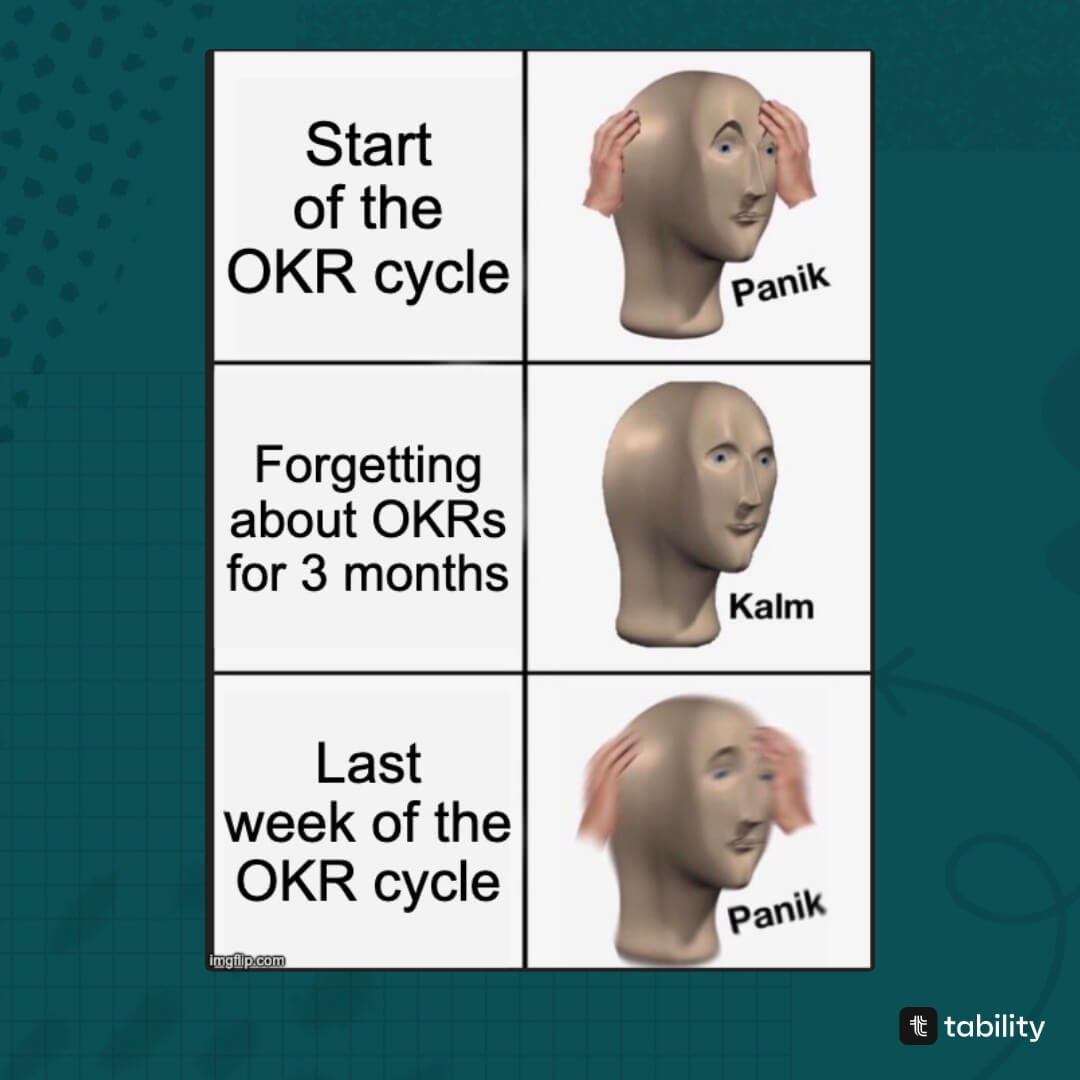
Frequent OKR check-ins are the absolute key to success. Too many teams set their plans at the beginning of the quarter and forget about them for the rest of the quarter.
When the quarter ends and stakeholders ask for reports, you look at your KRs and realize that no progress has been made.
This is completely defeating the purpose of OKRs.
If you're going to make progress, find alignment and focus, and build accountability, you MUST do frequent check-ins to ensure these things are getting done. This will help you maintain focus and reveal trends in your progress.
Your OKRs should cover the most impactful things your team is working on. Don't set and forget your OKRs; do frequent check-ins.
Too many goals is the #1 reason OKRs fail
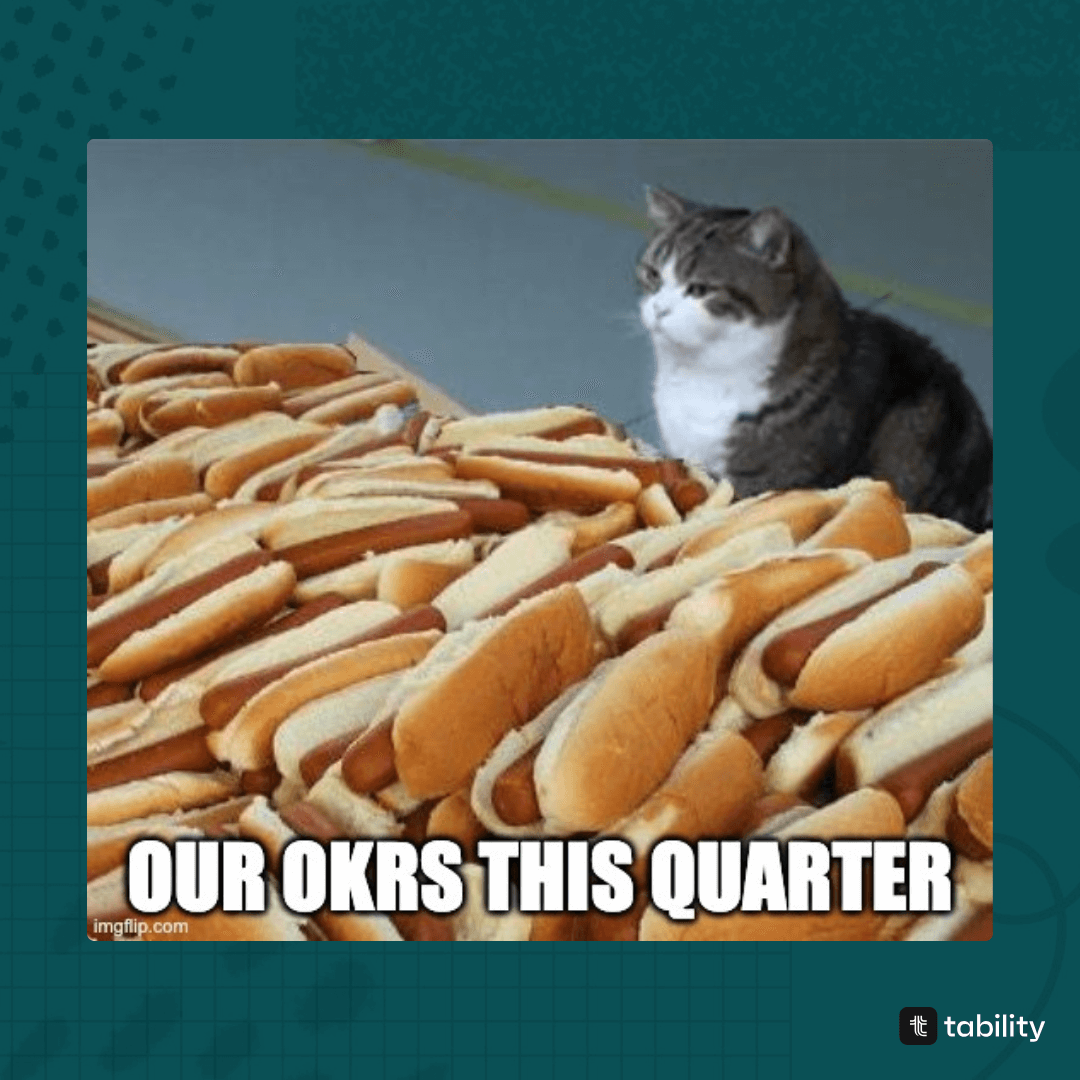
Based on OKR International's 2022 OKRs State of The Industry Report, 50% of all respondents said that having too many OKRs was their biggest mistake, followed by having an irregular cadence (19%) and tying OKRs to bonuses (18%).
The process of writing good OKRs is to make sure you're narrowing your focus on the work that makes the most impact. What is the MOST important thing your team can do? Plain and simple, if you are focused on too many thing, you're not focused at all. As much as we think we are multi-tasking geniuses, OKRs are here to help you find focus.
Of course, there are always going to be random tasks during the day that don't necessarily directly contribute to a Key Result. We get distracted, and we have other responsibilities, and that's okay. What's important is that you come back to your OKRs regularly to remind yourself of the focus. OKRs don't need to cover everything.
Your OKRs are not written in stone

You can't tell the future. When you start planning for a new year or quarter, you're gonna have some ideas of what will happen and what you want to achieve, given your current situation — but things will happen that you didn't expect.
The beauty of OKRs is that you'll be doing frequent check-ins and gathering more and more data as you progress through your quarter. This data gives you the ability to make informed decisions on where to go from here. It's best practice to try and stick to your KRs, but if you're starting to see clear signals that this isn't the right goal, right direction, or right things to focus on, reserve yourself the right to correct course. Much like a compass, if you see yourself going in the wrong direction, make sure to turn the wheel and correct course before it's too late.
OKRs aren't always the answer to your team's problems
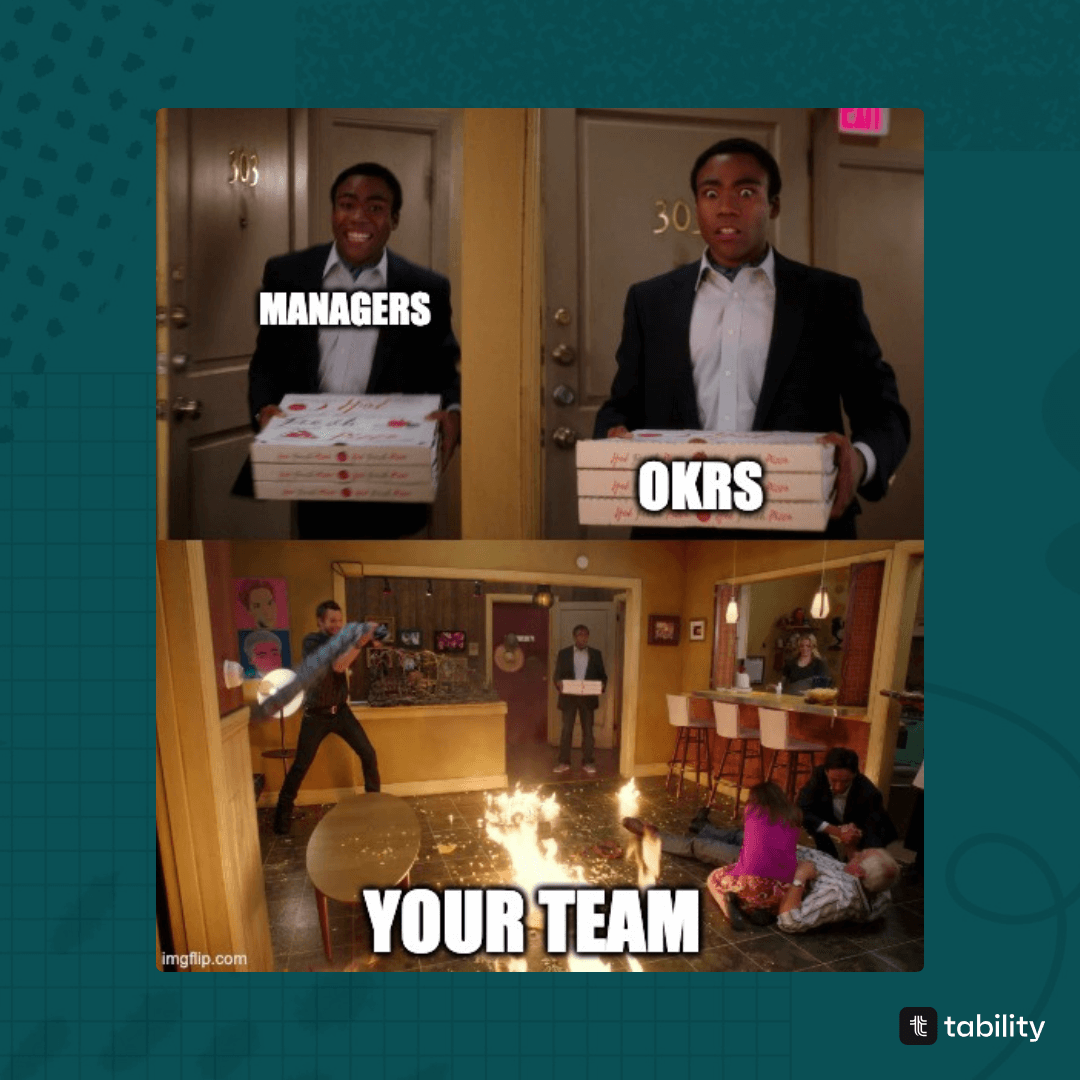
Yes, OKRs are popular. They work really well for a lot of teams out there. Just because Google did it doesn't mean it's the right solution for you.
It's not a slap-on solution that works for everyone. Properly rolling out it with a team or company requires the right team culture, an outcome-driven mindset, and a lot of effort and time.
While OKRs can be extremely beneficial, and worth the time if that's the solution you need, know that there may be other things you can tackle first that have more impact. OKRs are only good for you if your team is ready to benefit from them.
If you're set on doing OKRs, make sure you pick the best OKR software for your needs.
Don't cascade your OKRs, align
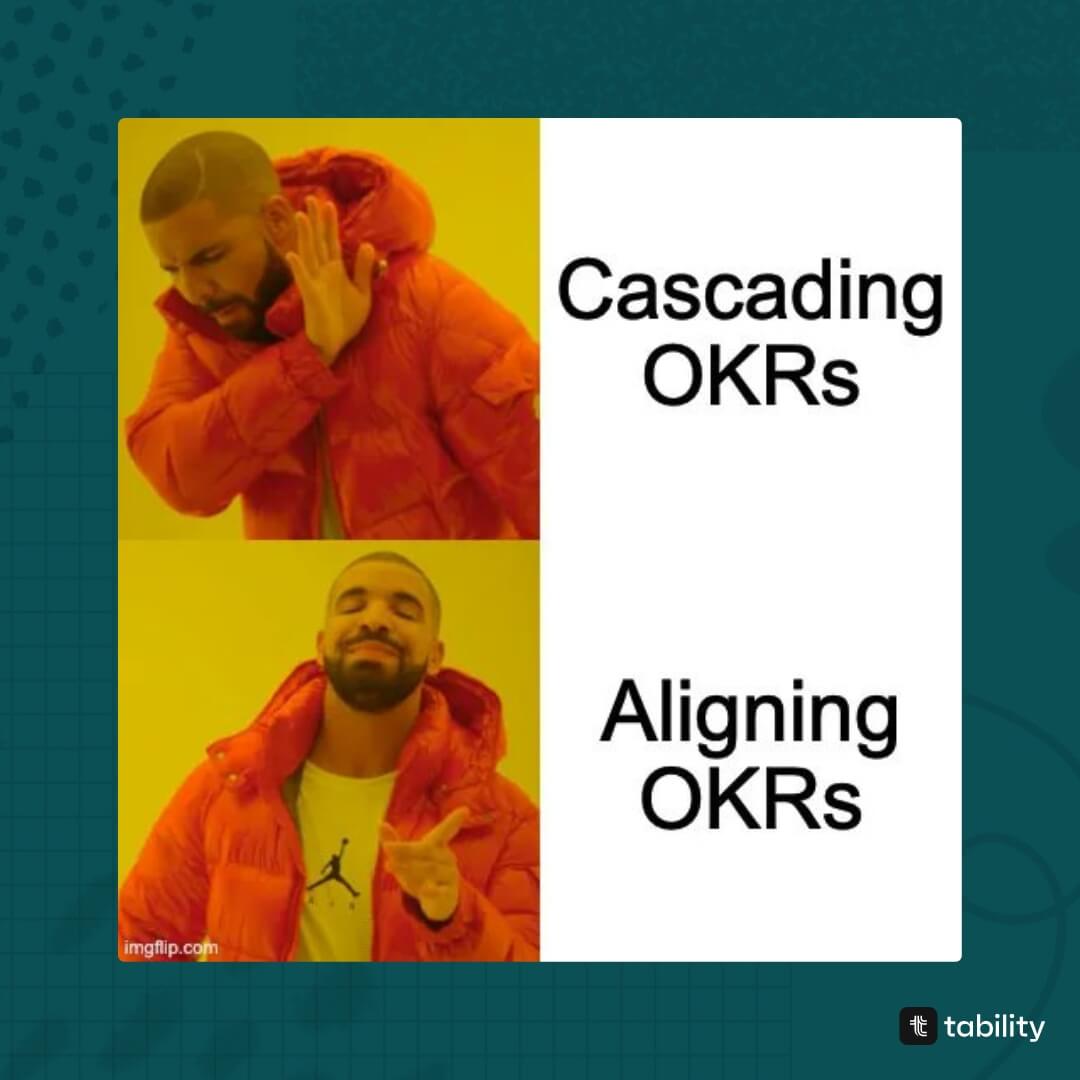
The first thing managers always want to do with their OKRs is: cascading. Now in theory, cascading is great. Everything links up to another KR and another KR and eventually the company OKRs. In theory, work waterfalls down like that.
Keyword: "in theory"
In practice, things don't always go according to plan. Having a rigid hierarchy to your goals ensures less flexibility. There are other ways to make sure that things are linked, connected, and teams are aligned without the ridgid cascading framework.
Do not cascade your OKRs, align them.
Be ambitious, but don't forget to celebrate

Google and the traditional books will tell you, aim for 70% with your OKRs. It sounds good in theory — aim for an ambitious goal to give yourself a range of success. However, this isn't always how people think. People like to get to 100%.
So it's important that you don't set goals that too easy but it's also important to get some wins. Make sure that regardless of what percentage you land at you're celebrating wins along the way and learning from the fails. On top of that, make sure that you don't tie your OKRs to employee performance or to financial benefits/bonuses. This will ensure that people pick goals that are too easy.
In the end, OKRs are more about the learnings and the progress made than hitting the numbers exactly. Make sure that you set this as the expectation, give people a safe place to experiment and work, so that everyone understands that 70%, 20%, or 100% there is something positive to gain from it.
Don't forget to do a retrospective
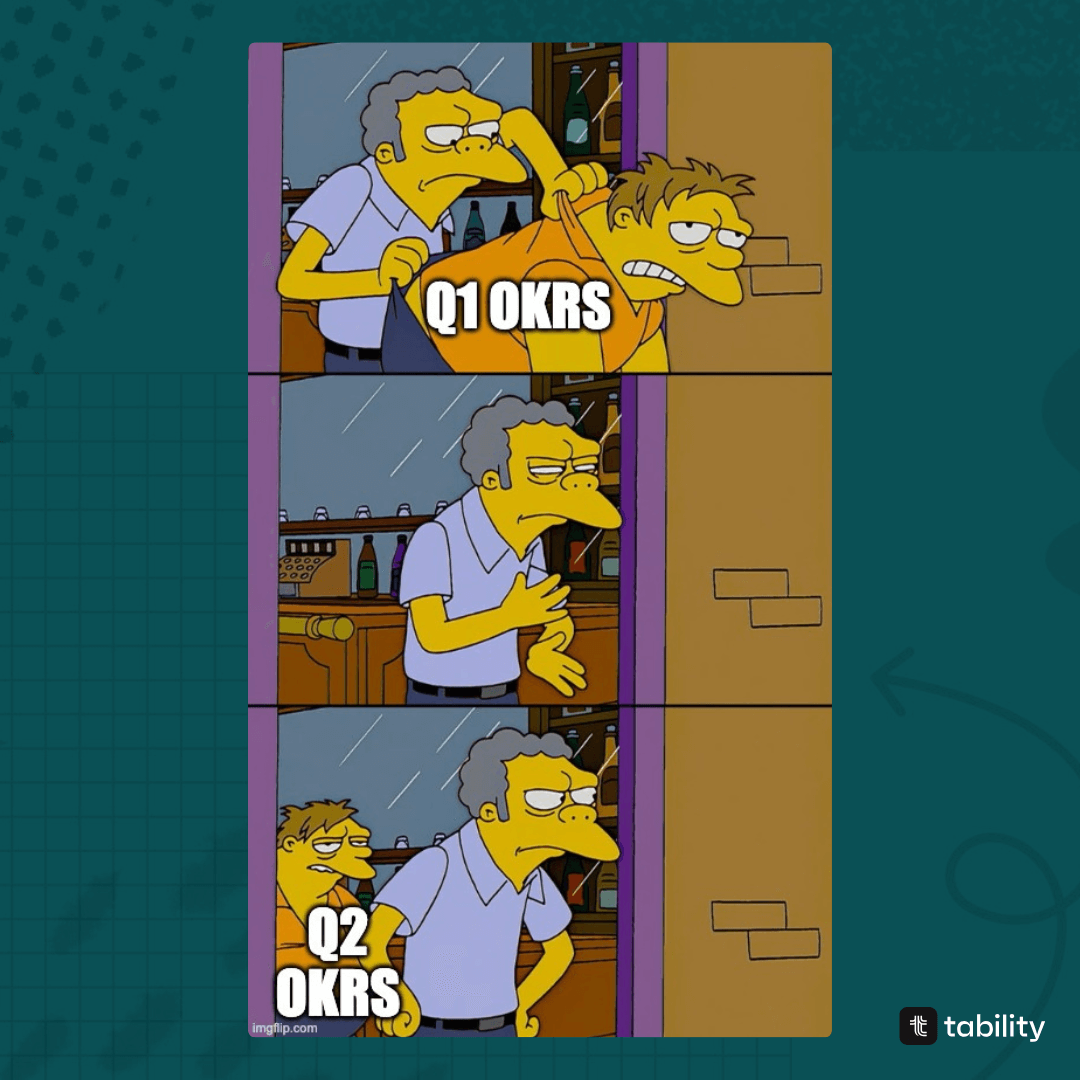
The whole point of doing OKRs is to learn from your progress. Having historical data is key to comparing where we are now, to where we were at the start of a quarter. The end of a quarter or start of the new quarter is the best time to look back and answer some questions:
- What did we do right?
- What went wrong?
- What can we change for next quarter?
- What do we continue doing?
Running an OKR retrospective can help you understand what to look for in the next OKR cycle, and avoid repeating the same mistakes.
Spreadsheets aren't built for OKRs
Spreadsheets are great. It's a fundamental tool that every business needs. It's flexible in use, powerful, and easy to use. It can even be a great starting point for figuring out your OKRs. There are tons of OKR spreadsheet templates out there that can help you draft a set of OKRs that your team can start tracking.
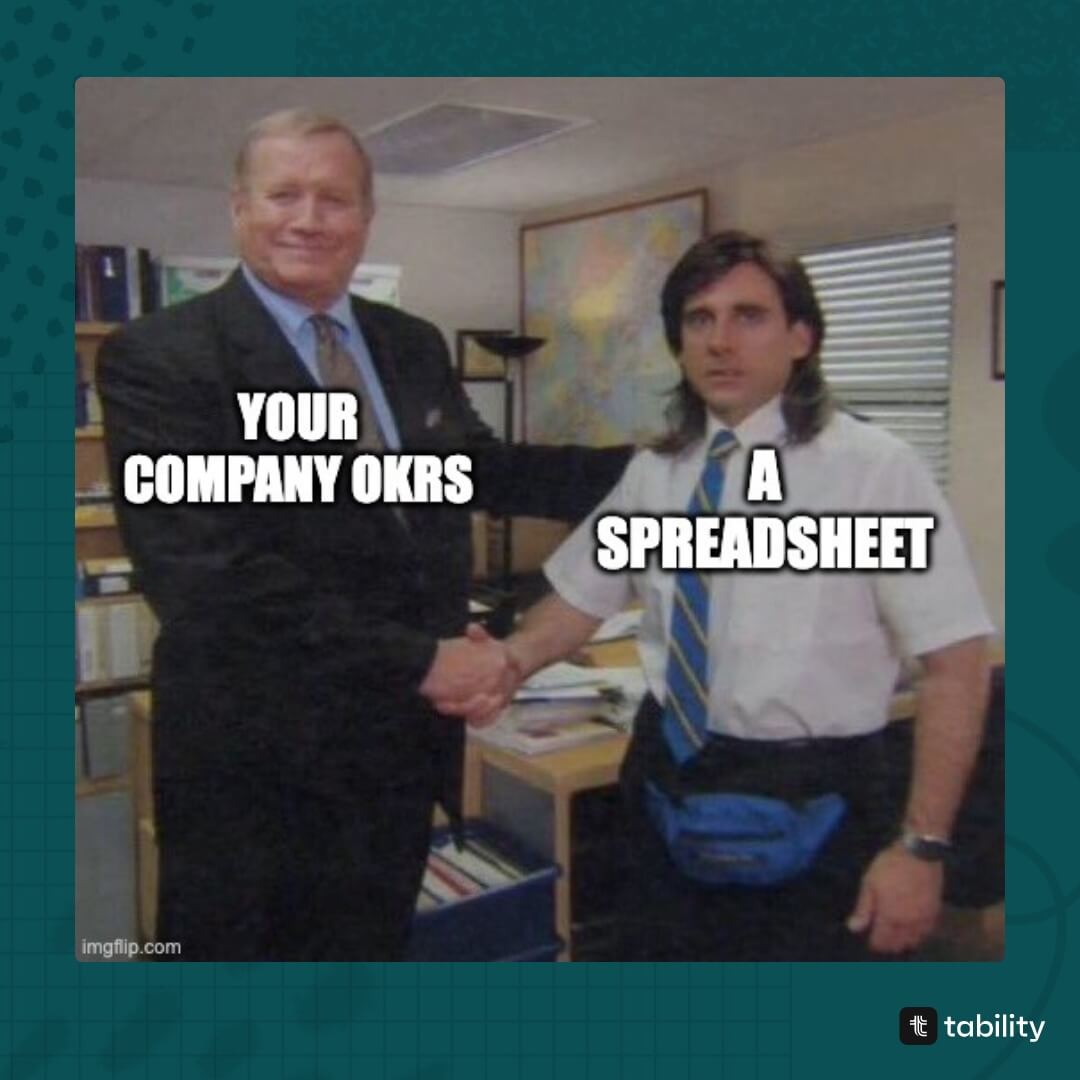
But at some point, your spreadsheet will stop working for you. The primary problem with spreadsheets is their absence of workflows. Spreadsheets lack the concept of time and won't prompt individuals to update their goals. Consequently, you find yourself sending emails every week and chasing your team on Slack to ensure you have the necessary data for your check-ins. Moreover, unless you're monitoring when updates are made, it can be challenging to determine if a status is accurate or outdated. It's static, your process is always manual, and, at some point, it won't be scalable. It's time to get your OKRs out of spreadsheets.
Set up automated reminders
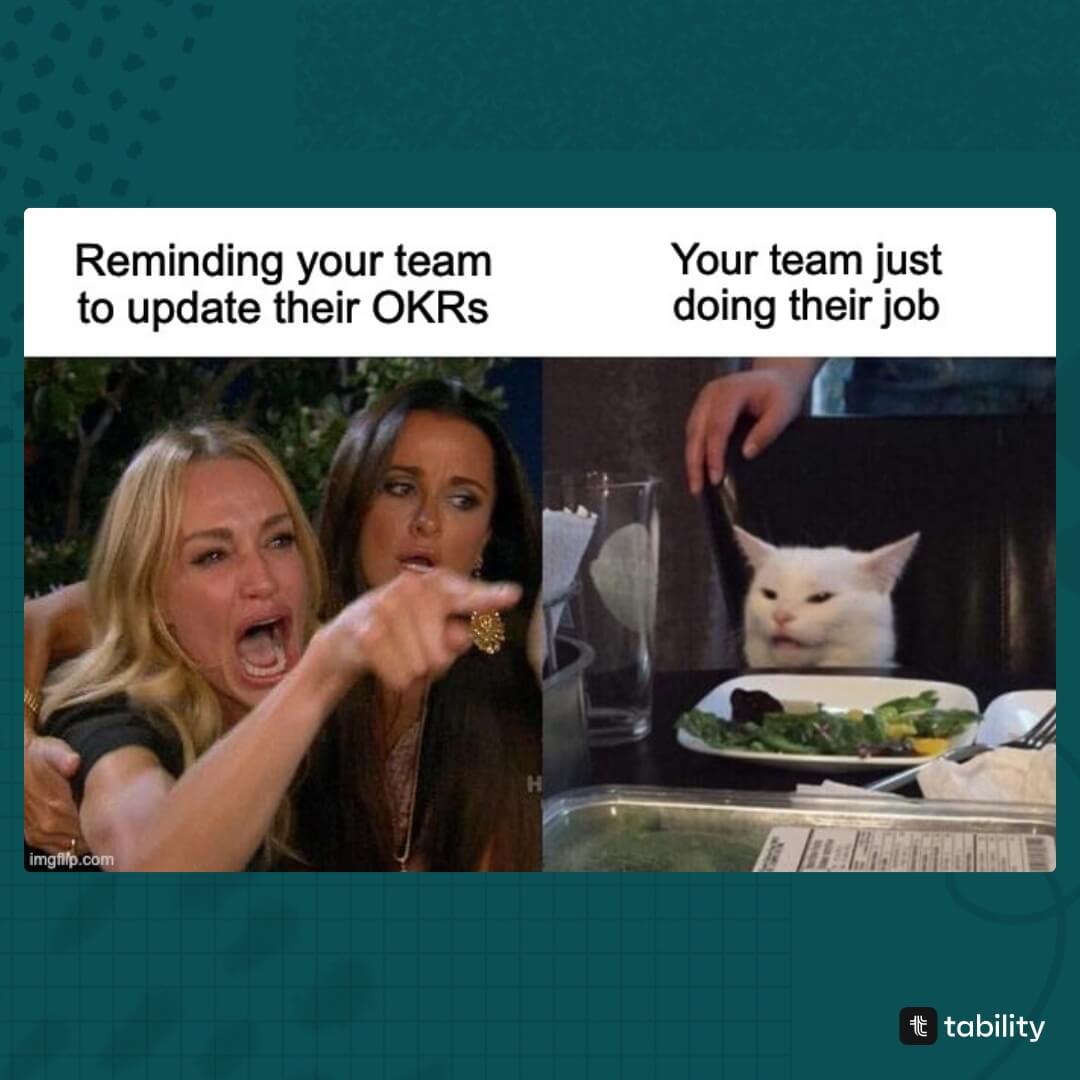
No one likes to feel like they're nagging — but when you've had to ask your team to do their check-ins and status reports a million times, it gets to be a real strain on your manager and team relationship.
The number one thing you should do is automate reminders. You can do calendar reminders or a scheduled automated email, but the easiest way is to run your goal tracking in Tability.
With automated reminders, your team automatically gets a notification to do their check-ins once a week. Not only does this relieve you from having to nag your teammates, but it’ll also help build a more structured ritual and a healthier relationship with the check-ins.
One of our customers, Huzzle, even said that their team went from not doing check-ins to seeing it as a meaningful reflection that the team looks forward to and finds helpful.
“Now I think people see it as a really nice check-in every Monday to make sure they have their own kind of reflection, to make sure they're on track with their own goals. So it's also changed the way I think our people see OKRs, which is great.”
Send an email every week and you never have to nag your team directly, your work relationship will thank you.
Reporting sucks, but it doesn't have to
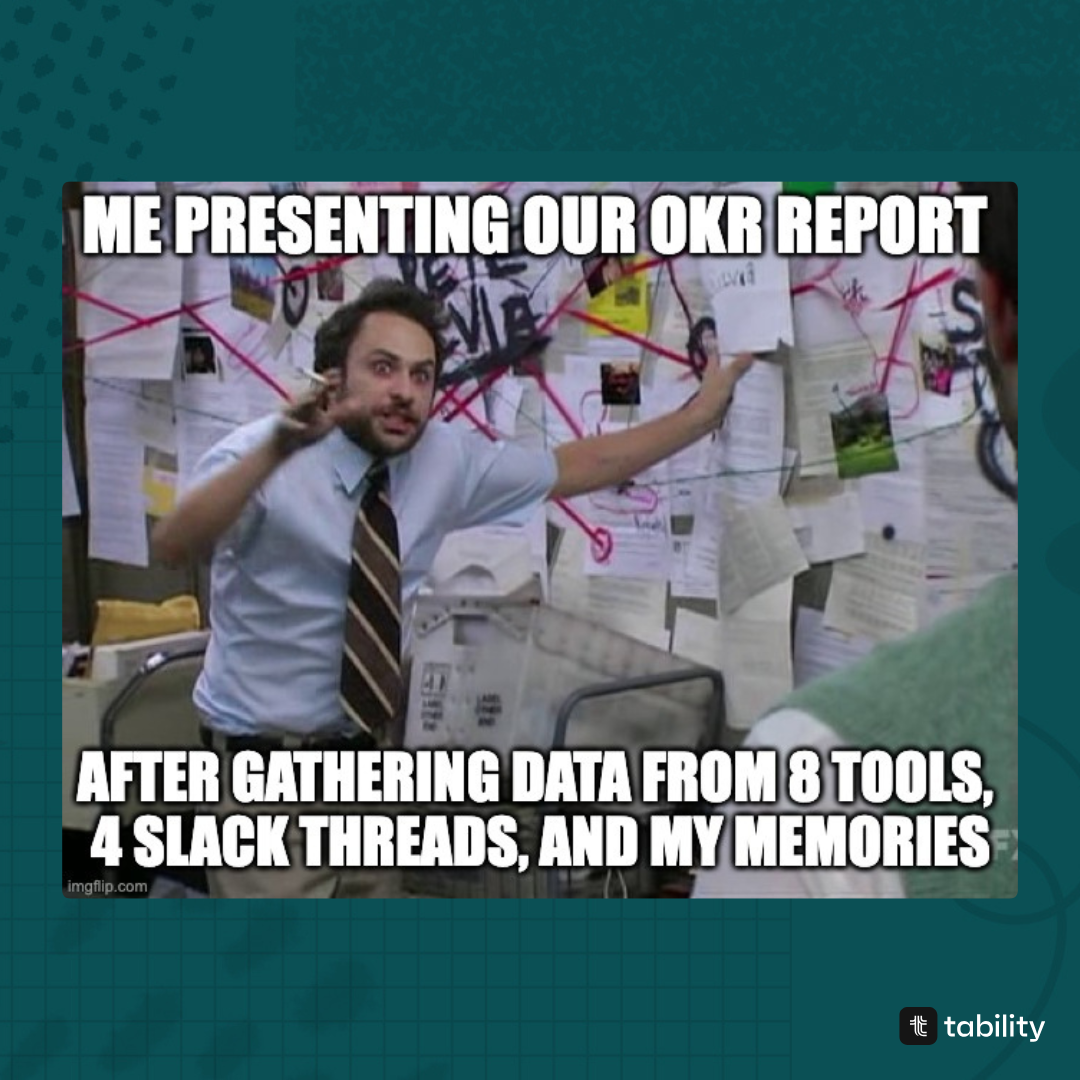
One of the biggest pain points of OKRs (and it’s not talked about enough) comes at the end of the quarter. How do you take all the work, data, conversations, and everything that’s happened — and sum it up?
Quite often, it becomes a full-time job for someone. It can take one to two weeks to gather data, chase status updates, run meetings, and, on top of that, put it all into a presentable format. That’s way too much.
With Tability, you can take this 1-2 weeks of work and do it in minutes. Using Tabby AI (our OKR Agent), Tability can gather all the weekly check-ins from your team, summarise them into a holistic picture of the entire quarter, then turn it into a single presentable format that you can share. Tability makes OKR reporting so easy.
Be honest with your OKRs
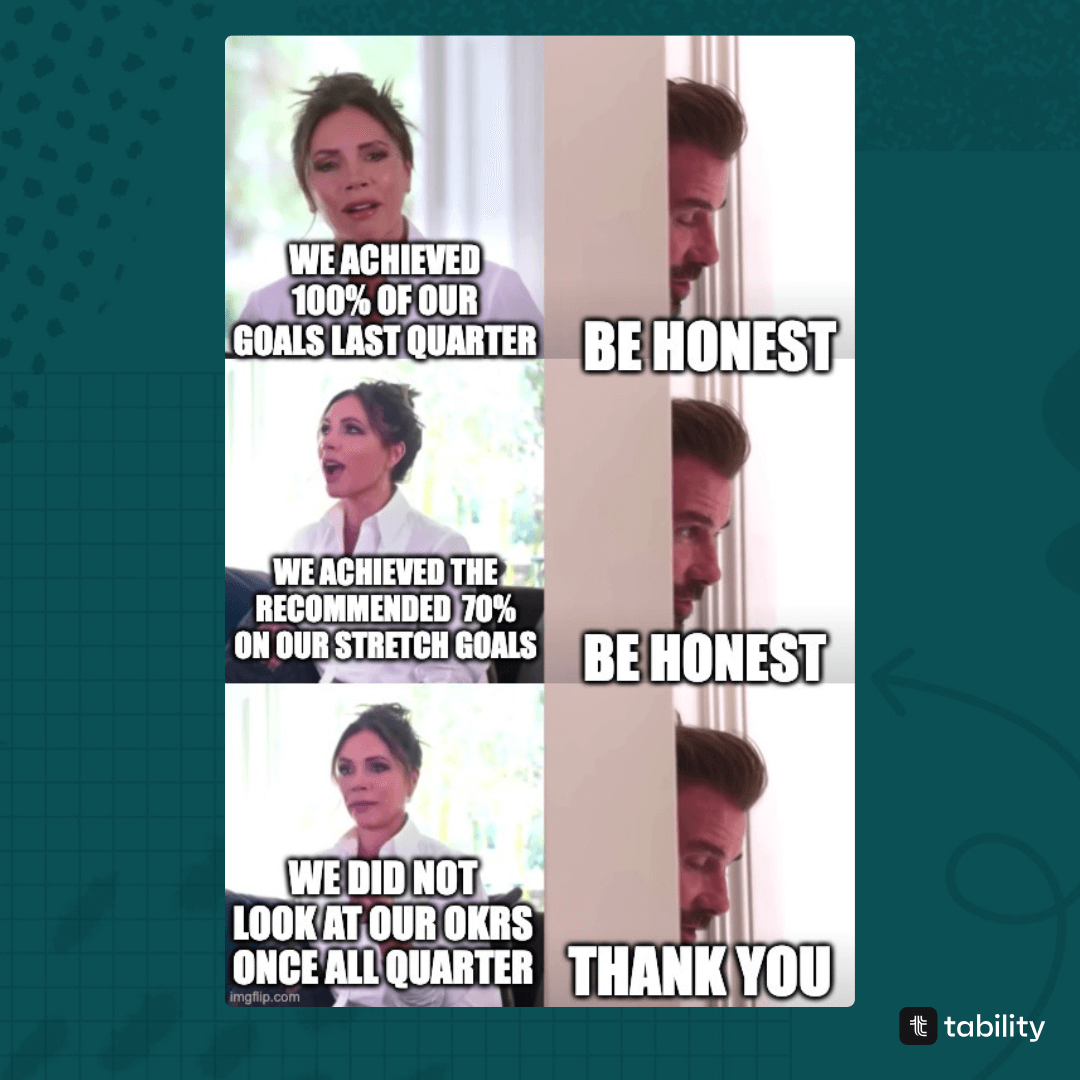
Don't lie about your results. It's easy to want to be fake positive, but this doesn't help anybody when it comes to OKRs.
Building a culture and an understanding around accountability and transparency is not easy, but it's key. There is absolutely no point in doing OKRs if your team can't be honest about their results (good or bad) in fear of a bad mark on their performance.
OKRs are about trying things, whether they hit or miss, and learning from that. NEVER tie your employee performance or bonuses to OKRs: this only leads to sandbagging goals and lying about results.
Side note: If your team just isn't good about updating their goals, or staying on track, make sure you build great habits to encourage team engagement around OKRs.
You aren't always going to get OKRs right
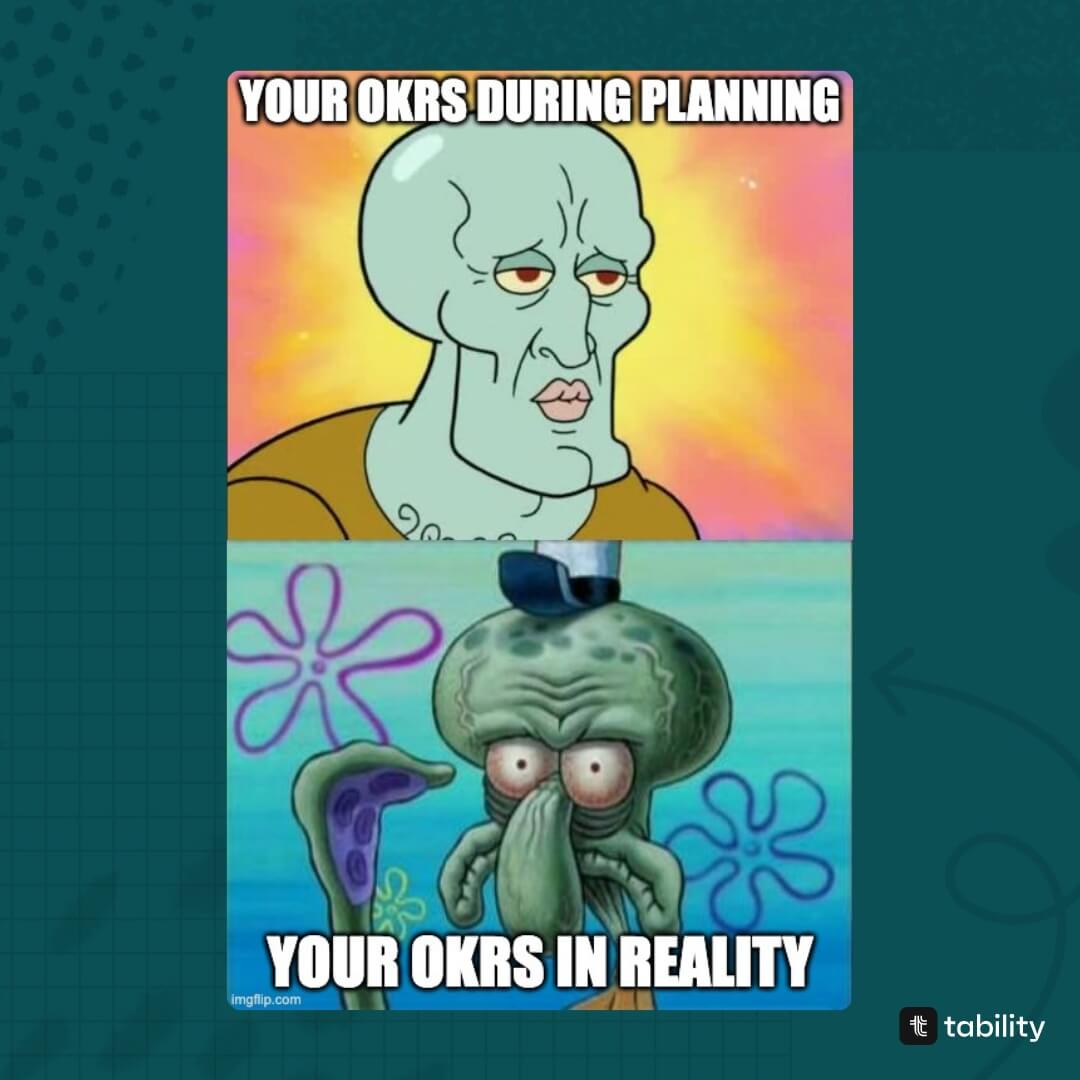
OKRs aren't perfect. It's just part of the process. You start your quarter with a grand vision of what your team can accomplish — but it hardly plays out like that. There are tons of tools and resources out there to help you succeed with OKRs. Make sure you:
- Follow best practices and guides on how to be more successful with your OKRs.
- Avoid common pitfalls and create OKRs your team can get behind.
- Learn how to write good SMART goals that are measurable and realistic.
- Find the right OKR tools to help you on your process.
Don't get discouraged. In fact, let this idea liberate you from the urge to be perfect. Understand that things aren't going to be according plan and that OKRs are here to give you direction, but not perfection.
Again, please stop cascading your OKRs

This may feel like déjà vu, but we'll say it again. So many people want their OKRs to 'cascade.' This just means they usually want that pretty graph that they can show their boss how all the OKRs align neatly. The real world doesn't always work that way.
There are many reasons why you should not cascade your OKRs, so if you're still feeling an urge to cascade your OKRs, please rethink that.
For a better way to do it, see how we do it at Tability: How we align OKRs (because cascading sucks).
Conclusion: Getting the most out of your OKRs
Getting the most out of your OKRs involves more than just setting ambitious goals and tracking key results. It requires a combination of strategic planning, regular check-ins, and a focused, engaged, and outcome-driven work culture. This doesn't mean you can't have fun, or share a laugh. But having the right tools to maintain focus can enhance team productivity, build healthy team accountability, and align everyone toward a common purpose.
Share these memes with your team to provide a light-hearted way to reinforce these best OKR practices. As we've seen, the right meme can offer valuable insights into ambitious goal-setting, team alignment, executive buy-in, and continuous improvement. By embracing this playful approach, you can keep your team focused, aligned, and motivated, ensuring that your OKRs drive the desired results and contribute to your organization's success.


.jpg)